Table of contents
- What is Home Automation?
- Types of Home Automation Systems
- Components of a Home Automation System
- Popular Home Automation Technologies
- Integration with Other Smart Devices
- Factors to Consider when Choosing a Home Automation System
- Installation and Set-up of a Home Automation System
- Cost of Home Automation Systems
- Conclusion
- Frequently Asked Questions
Imagine controlling your entire home at the touch of a button. Home automation systems are no longer a futuristic fantasy; they’re a modern-day reality that can simplify and enhance your lifestyle. We’re diving into the smart technology that can transform your living space into a haven of convenience and luxury.
From voice-activated lighting to security that thinks on its feet, we’ll explore how these systems integrate seamlessly into our daily routines. Whether you’re starting from scratch or upgrading your existing setup, we’ve got the insights to guide you through the world of home automation.
At Schaller Design Lab, we specialize in bringing these cutting-edge solutions into homes around the globe. If you’re considering a smart home project, need expert advice, or are looking to purchase the right equipment, we’re here to help. Let’s make your home smarter, together.
What is Home Automation?
Definition of Home Automation
Home automation refers to the advanced interconnectivity of household appliances and systems. It involves integrating technology into our living spaces in such a way that allows for centralized control over various home devices. Essentially, we’re talking about a network comprised of electronics, appliances, and systems that communicate with one another and can be managed remotely, often via smartphones, voice commands, or AI assistants.
In these automated homes, lighting, temperature, entertainment systems, and security features can be set up to respond to our presence or adjust according to pre-set preferences. The goal is to make our daily lives more convenient, efficient, and secure by allowing us to manage every aspect of our home environment more easily.
Benefits of Home Automation
The advantages of incorporating home automation are compelling:
- Enhanced Convenience We can control various elements like lighting and temperature with the tap of a button, without ever needing to physically be present. – Improved Energy Efficiency By optimizing how and when devices operate, we’re often able to significantly reduce our overall energy consumption. Automated systems can adjust energy usage based on peak hour prices or switch to energy-saving modes when a room is unoccupied.
- Increased Security From smart locks to surveillance cameras, these systems provide real-time alerts and have the ability to deter potential intruders, giving us peace of mind whether we’re asleep or away.
- Accessibility Those with mobility issues or disabilities especially benefit from home automation, as it provides them with greater autonomy and the ability to easily control their environment.
- Customization and Flexibility Personal preferences can easily be programmed into our smart home systems. Plus, they’re typically designed to be scalable and adaptable to new devices and appliances as they emerge on the market. Home automation has truly revolutionized the way we manage our households. By offering advanced control and monitoring capabilities, these systems ensure that our living spaces work for us, making daily routines more seamless and less time-consuming. Through increased connectivity and intelligent design, they have the power to accommodate our unique needs and preferences at every turn.
Types of Home Automation Systems
Wired Home Automation Systems

A modern, minimalist living room featuring a flat-screen TV, a comfortable sofa, and a cozy bed with an open laptop, showcasing the seamless integration of technology in home design.
When diving into the area of home automation, we’ll discover that wired systems are often the cornerstone for many robust smart home setups. These systems run on electrical wiring and typically involve a centralized control panel. One of the distinct advantages of wired systems is their stability. Since these devices are directly connected by cables, they’re less prone to interference compared to their wireless counterparts. This direct connection also means that wired systems are highly reliable and offer a consistent performance, which is a critical factor for home automation.
Also, wired setups can handle higher loads, so allowing us to connect a wide range of devices. Think security cameras, lighting systems, and high-powered appliances—all intricately integrated and operating seamlessly. Yet, it’s important to note that installation may require professional help due to the complexity of running wires throughout our homes, especially during retrofits. ### Wireless Home Automation Systems
Transitioning to wireless home automation systems, we embrace the marvel of convenience and flexibility. These systems communicate via wireless protocols such as Wi-Fi, Zigbee, or Z-Wave. The beauty of going wireless is the ease of installation—no need to tear down walls or run cables across rooms. It’s mostly plug-and-play, which opens up home automation to more people.
Wireless systems offer remote access, meaning we can control our devices from anywhere with an internet connection. This is a game-changer for us as we can adjust settings on-the-go, ensuring that our homes are always comfortable and secure. The scalability of these systems is also a key benefit. Want to add a new smart bulb or a sensor? It’s as simple as connecting it to our network, usually through a user-friendly app. That said, we must be mindful of network security and ensure that our systems have robust protection to thwart potential cyber threats.
Adopting wireless home automation does come with some considerations around signal range and interference from other devices, but modern technology has made great strides in overcoming these issues. With the right setup, wireless systems offer us a level of control and sophistication that truly reflects the modern age of smart living.
Components of a Home Automation System
Central Control Unit
The Central Control Unit, often referred to as the brain of the home automation system, is where the magic happens. It manages communication between all connected devices and executes programmed tasks based on user input or automated schedules. High-quality control units are capable of processing a vast number of commands and coordinating multiple systems simultaneously. They’re usually equipped with both wired and wireless communication capabilities to ensure seamless integration across a variety of devices.
Sensors and Detectors
Sensors and detectors are the watchful eyes and ears of any home automation system. They provide real-time data on environmental conditions, ranging from temperature and humidity to the detection of movement or smoke. This category includes:
- Temperature sensors that help manage heating and cooling systems efficiently
- Motion detectors that trigger security alarms or lighting when activity is detected
- Leak sensors that send alerts in the case of water leaks to prevent damage
Strategically placed sensors ensure our smart homes react intelligently to changing conditions with minimal human intervention.
Actuators and Controllers
Actuators and controllers are the hands performing the physical tasks in a home automation system. They translate digital commands into physical actions, such as turning on the lights or adjusting a thermostat. Examples of actuators include:
- Smart switches that regulate power supply to appliances
- Thermostatic valves that control water flow in heating systems
- Motorized blinds that adjust according to the sunlight intensity
Our smart devices rely on these components to carry out our pre-set preferences, such as dimming lights at a certain time or revealing doors upon our arrival.
User Interface
The User Interface is our direct line of communication with the home automation system. It needs to be intuitive and user-friendly, allowing us to interact with our smart devices seamlessly. We use interfaces like:
- Smartphone apps for remote control and notifications
- Voice assistants for hands-free operation
- Wall-mounted panels for central control within the home
Through these interfaces, we’re able to adjust settings, receive notifications, and monitor our homes with just a few taps or voice commands.
Popular Home Automation Technologies

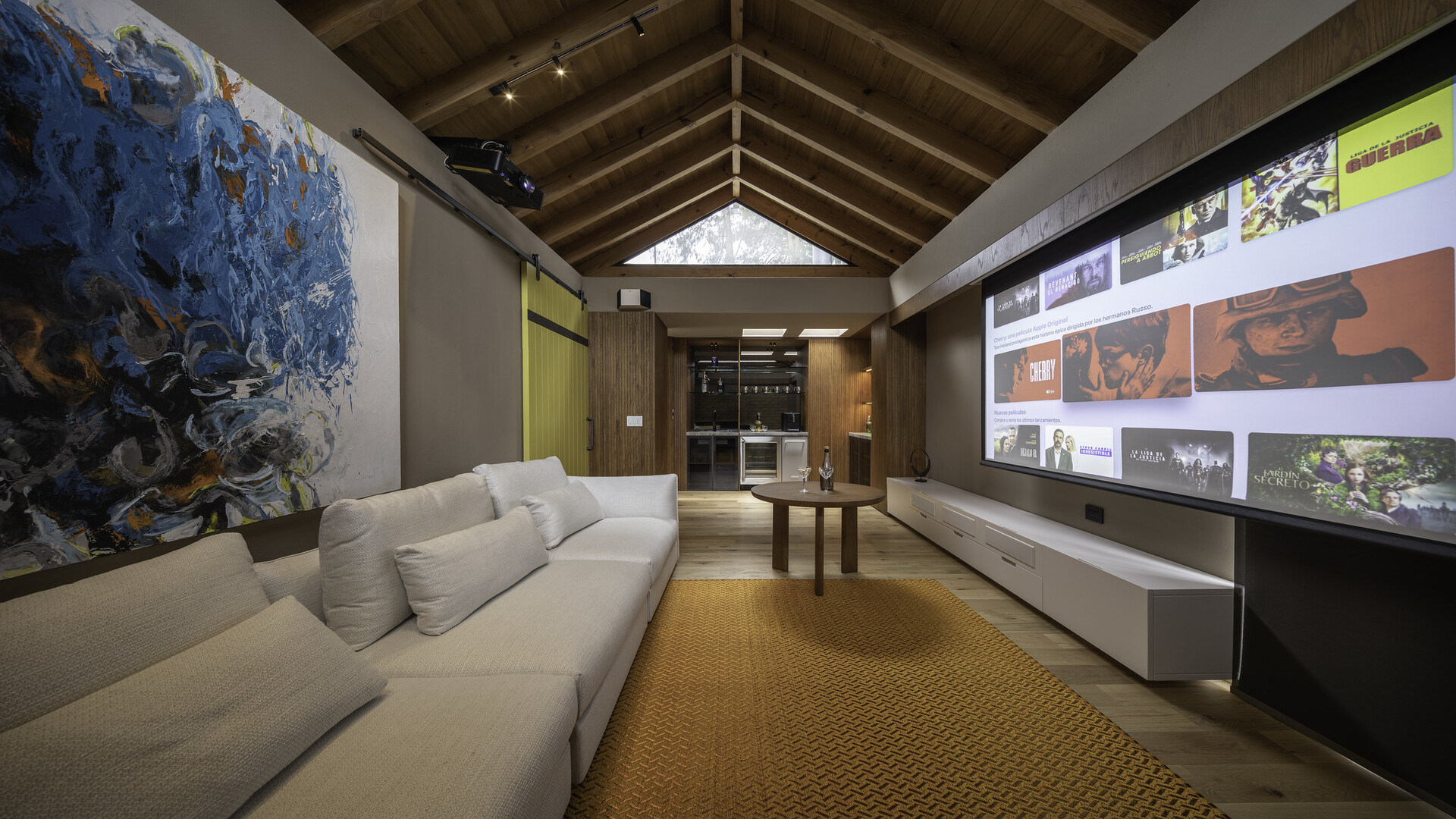
A glimpse into a modern and elegant interior space, showcasing a blend of wooden and concrete elements, a cozy kitchen, and smart home technology.
In the area of home automation, certain technologies stand out for their reliability and widespread adoption. Exploring these technologies will illuminate why they’ve become staples in smart homes today.
Z-Wave
Z-Wave operates like an efficient postman within a home automation system. It uses a low-frequency, mesh network that allows devices to communicate by daisy-chaining signals to one another. This ensures extended range throughout the home without relying on Wi-Fi. Here are key elements that define Z-Wave’s relevance:
- Frequency: Z-Wave operates around 908.42 MHz in the US, which minimizes interference with other household devices.
- Network Size: Supports over 232 devices, offering scalability for comprehensive home systems. Because of its low power consumption and strong encryption, Z-Wave is highly regarded for security and energy management solutions.
Zigbee
Zigbee thrives on creating personal area networks with small, low-power digital radios. Like Z-Wave, it’s based on a mesh network structure, but it operates at a higher frequency of 2.4 GHz, which is globally recognized. Zigbee’s main characteristics include:
- Compatibility: It supports a wide range of protocols, making it versatile for various devices.
- Power Efficiency: Especially designed for low-power operation, extending battery life for devices. Zigbee’s strength lies in its flexibility and its suitability for a myriad of smart home devices requiring intermittent communication.
Wi-Fi
Wi-Fi is arguably the most familiar technology we encounter. It’s the backbone of internet connectivity in many homes, and it naturally extends to home automation. Wi-Fi excels in:
- High Data Transfer Rates: Suitable for devices that need to send large amounts of data quickly.
- Easy Access: Nearly all smartphones and computers are already equipped to handle Wi-Fi, making integration simple.
But, Wi-Fi’s higher power consumption and its potential for congestion, particularly with multiple devices, should be kept in mind.
Bluetooth
Bluetooth technology is synonymous with wireless communication, especially in personal devices. For home automation, its role is more nuanced but no less important. The main attributes of Bluetooth include:
- Low Energy (BLE): Ideal for devices that don’t require constant connection and demand battery efficiency.
- Proximity: Particularly useful for location-based automation tasks, like revealing doors as you approach.
Bluetooth’s strength in the home automation space is growing through the continued development of BLE and the expansion of its ecosystem.
Insteon
Insteon offers a unique approach by combining the robustness of wired powerline communications with the flexibility of wireless signals. This dual-mesh network amplifies its resilience and minimizes the downsides of relying on one communication method alone. Its defining features are:
- Dual-Band: Incorporates both RF and powerline communication for increased reliability and coverage.
- Scalability: Seamlessly integrates a large number of devices without performance drop-offs.
Insteon’s balanced combination of radio and powerline signals positions it as a stable and secure choice for home automation enthusiasts.
Integration with Other Smart Devices
When delving into home automation systems, one critical aspect is the integration capacity with other smart devices. By streamlining this integration, households can craft a more efficient and responsive smart home ecosystem. Let’s explore the key ways home automation systems can work seamlessly with other gadgets.
Integration with Smart Speakers
Smart speakers are the cornerstones of voice control in a smart home. We Have Witnessed a Surge in smart speaker usage as they have become the linchpins for controlling various smart devices through simple voice commands. The interaction between smart speakers and home automation technologies is vital:
- Smart speakers act as a hub, allowing for centralized control over other devices.
- Users can issue commands to adjust settings on different gadgets without physical interaction.
- Voice-recognition software in smart speakers enhances accessibility and ease of use.
Integrating seamlessly with home automation, smart speakers transform our interaction with technology, providing a hands-free approach that’s become a hallmark of modern living. The ability to sync with Z-Wave, Zigbee, and Wi-Fi networks allows these speakers to cast a wide net over the smart home world, enveloping a multitude of compatible devices.
Integration with Smart Cameras
Smart cameras offer an additional layer of security and awareness in our smart homes. The key benefits of integrating smart cameras with home automation systems include:
- Real-time alerts and video feeds directly on our smartphones or other connected devices.
- Smart cameras trigger other actions within the home, like turning lights on when motion is detected.
- Advanced image recognition differentiates between known occupants, strangers, and pets, optimizing alert precision.
A smart camera that’s well integrated into a home automation system not only heightens security but also enhances the utility of other smart devices. For instance, connectivity with smart locks can help a more secure entry system that operates based on visual identification.
Integration with Smart Thermostats
Smart thermostats are instrumental in energy management and achieving Optimal Thermal Comfort. Their integration with home automation systems reaps several advantages:
- Automated adjustments to the heating and cooling schedule based on the occupants’ habits.
- Remote temperature control using mobile devices, anywhere and anytime.
- Data collection on energy usage, leading to smarter consumption patterns.
What stands out is the ability of smart thermostats to “learn” from our behaviors and adjust settings to maintain comfort while minimizing energy consumption. Coupled with other smart devices, such as automated blinds or ceiling fans, smart thermostats contribute to a home environment that’s both intelligent and eco-friendly, catering to our sense of comfort and sustainability.
Factors to Consider when Choosing a Home Automation System
Compatibility with Existing Devices
When delving into home automation, it’s critical to ensure that new systems mesh seamlessly with devices already in your home. Compatibility reduces the need for replacements and prevents the headache of maintaining disparate systems. Most home automation systems support standard communication protocols like Z-Wave, Zigbee, or Wi-Fi, but it’s essential to confirm this before making an investment.
- Verify the supported protocols of your current devices
- Check product specifications or consult with manufacturers
- Be wary of systems that require proprietary technologies
Leading automation platforms generally offer cross-compatibility, facilitating a stress-free addition to your smart home network.
Scalability and Expandability
One of the key attractions of a smart home is its ability to grow with your needs. Opt for a system that not only fulfills your current requirements but also has the capacity to incorporate future tech innovations. Scalability is the cornerstone of a future-proof home automation system.
- Choose a system that supports a wide range of devices
- Look for an open API that facilitates third-party integrations
- Avoid products with limitations on the number of devices
By selecting a scalable solution, you pave the way for hassle-free upgrades and expansions as your smart home evolves.
Security and Privacy
In a world where data is as valuable as currency, the security and privacy of your home automation system are paramount. A robust system should have strong encryption and regular security updates to combat potential vulnerabilities. Prioritize systems with:
- End-to-end encryption for data transmission
- Multi-factor authentication options
- Clear privacy policies detailing data usage
Ensuring the protection of your personal information is non-negotiable, and a secure system grants you peace of mind in your interconnected domicile.
Installation and Set-up of a Home Automation System
Professional Installation Services

A cozy, modern living room illuminated by warm lights, showcasing a comfortable sofa, a television, and a stunning cityscape view through the window.
When venturing into the area of home automation, professional installation services offer peace of mind. These technicians are well-versed in the latest technology and ensure everything is set up correctly and efficiently. We understand that integrating various devices from different manufacturers can be complex. That’s why leveraging the knowledge of a pro can save hours of troubleshooting. Professional services typically provide:
- Expert assessment of your home’s needs
- Seamless integration with existing tech
- Guidance on how to use the system
Opting for a professional install also often comes with support and warranties, making it a wise investment for those who want a hassle-free experience and long-term reliability.
DIY Set-up Options
For the hands-on individual, setting up a home automation system can be a rewarding project. It’s crucial to do thorough research to understand the requirements of your devices. Most home automation technologies are designed with the consumer in mind, offering user-friendly instructions. When tackling the installation yourself, we advise you to:
- Start with a clear plan of which devices to install and where they should go
- Ensure you have all necessary tools and accessories
- Follow the manufacturer’s installation guides precisely
- Use online resources and forums for additional help
The DIY route not only saves on costs but can also impart a deep understanding of your system, allowing for easier troubleshooting and customization. Be aware, though, that some devices may require a level of technical expertise or certification for installation.
By selecting the right installation method to match our skills and expectations, we ensure that our investment into a smart home pays off in ease and convenience.
Cost of Home Automation Systems
Upfront Costs
When we look into home automation systems, the initial expense is a pivotal factor. Upfront costs generally include the hardware, installation, and any necessary control systems. We’ve seen that hardware, the tangible components such as smart thermostats, cameras, and lighting systems, usually form the bulk of the expense. In 2022, the average homeowner spent between $2,000 and $5,000 on smart home devices alone. If we decide on professional installation, that’s an additional cost to consider, which can range from a few hundred to several thousand dollars depending on the system complexity.
| Hardware | Average Cost Range |
|---|---|
| Smart Thermostats | $100 – $250 |
| Cameras | $50 – $300 per camera |
| Lighting Systems | $50 – $200 per light |
| Installation | Cost Range |
|---|---|
| Professional Installation | $500 – $5,000+ |
It’s important to note that opting for high-end, premium brands can push the initial costs even higher. Meanwhile, choosing simpler, more basic automation setups can keep our upfront expenses lower.
Long-term Costs
Beyond the initial setup, we must consider long-term expenses associated with home automation systems. Such costs include ongoing maintenance, potential subscription fees for cloud services or updates, and electricity usage. Some smart devices might require a monthly subscription for full functionality, typically ranging from $5 to $15 per month. Also, depending on a system’s efficiency and how often we use it, increased energy costs can become an additional financial factor. But, it’s also possible that through smart energy management, our system could optimize electricity use, potentially resulting in savings over time.
| Subscription Service | Monthly Cost |
|---|---|
| Basic Cloud Services | $5 – $10 |
| Premium Features | $10 – $15+ |
Maintaining and updating our smart home system also ensures it runs efficiently and securely. We might not see these costs upfront, but they are crucial for the longevity and effectiveness of a home automation system.
Conclusion
We’ve delved into the various costs that come with integrating a smart home system. While there’s an investment to be made upfront, the benefits of convenience, security, and potential energy savings are compelling. It’s clear that the journey into home automation is not just about the initial setup but also about the ongoing commitment to maintenance and updates. As we embrace this technology, we’re stepping into a future where our homes are not just shelters but dynamic environments that respond to our needs and enhance our daily lives. Let’s make the smart move together, understanding the costs but also the incredible value home automation brings to our lives.
Frequently Asked Questions
What are the initial costs of home automation systems?
The initial costs of home automation systems typically include the purchase of hardware such as smart thermostats, cameras, and lighting systems, along with professional installation fees and control systems. The hardware generally represents the main expense, with cost ranges varying based on the type of devices chosen.
Do home automation systems require professional installation?
Yes, while some home automation devices offer DIY installation, professional installation is often recommended to ensure proper setup and connectivity. This service is an additional cost to factor into the overall investment.
Are there any long-term costs associated with home automation systems?
Long-term costs for home automation systems may include ongoing maintenance, subscription fees for cloud services or software updates, and potentially increased electricity usage if the devices are not energy-efficient.
Do all smart devices come with a monthly subscription for full functionality?
Not all smart devices require a monthly subscription. Some devices offer basic functionality without fees, but a subscription may be needed for advanced features like cloud storage or premium services.
How important is it to maintain and update smart home systems?
Regular maintenance and timely updates are crucial for the longevity and effectiveness of smart home systems. Keeping software up to date ensures compatibility with new devices and security features, while hardware maintenance can prevent malfunction and prolong the life of the devices.
Our Portfolio

Master Auditoriums at UniNorte: How Schallertech Created a 21st Century Learning Space

Mutis Auditorium at Rosario University. The Greatest Acoustic Challenge We Have Faced.


GP Apartment: Exceptional Design and Technology


Metropolitan Stadium: Clear and Powerful Sound with Renkus-Heinz Speakers

Designing the Sound and Visual Experience of Teriyaki Komodo Restaurant: A Case of Technological Innovation


Chapel Hacienda Las Marías. The Evolution of Lighting in Worship Spaces

Residential Design Casa JC: Sophistication and Technology
Table of contents
- What is Home Automation?
- Types of Home Automation Systems
- Components of a Home Automation System
- Popular Home Automation Technologies
- Integration with Other Smart Devices
- Factors to Consider when Choosing a Home Automation System
- Installation and Set-up of a Home Automation System
- Cost of Home Automation Systems
- Conclusion
- Frequently Asked Questions