Table of contents
We’re diving deep into the world of psychoacoustics, where sound shapes our reality in ways we’re only beginning to understand. At Schaller Design Lab, we’re fascinated by how a simple melody can evoke a memory or how a particular frequency can alter our mood.
Through our exploration, we’ll uncover the intricate ways sound influences our perceptions and behaviors. It’s a journey through the unseen waves that touch our senses and the science that explains why certain sounds can calm us or send shivers down our spine. Join us as we decode the mysteries of psychoacoustics and its profound impact on human perception.
The Basics of Psychoacoustics
What is Psychoacoustics?
Psychoacoustics is the branch of psychology concerned with how we hear and interpret sounds. It combines various disciplines, including psychology, acoustics, and neurology, to understand how auditory signals are processed by the brain. At Design Lab, we’ve seen firsthand how psychoacoustics helps in designing environments and products that harmonize with users’ psychological needs. It’s not just about volume and pitch; psychoacoustics looks at how sound patterns influence emotions and behaviors.
The Human Auditory System
The auditory system is our biological apparatus for hearing, and it’s remarkably complex. Sound waves enter through the outer ear and travel down the ear canal. They hit the eardrum, causing vibrations that are then amplified by the three bones in the middle ear. The inner ear’s cochlea transforms these vibrations into electrical signals, which the auditory nerve transmits to the brain. This incredible system enables us to detect a wide range of sounds, from the subtle rustling of leaves to the thunderous roar of a waterfall.
Perception of Sound
Perception of sound plays a critical role in our everyday experiences. Sound perception isn’t just about detecting noise; it’s about interpreting the complexities of that noise and how it affects us. Frequencies and rhythms can stir emotions or signal danger. Our research at Design Lab has shown that certain soundscapes can enhance concentration or relaxation. Background noise levels significantly affect productivity and well-being. Recognizing these auditory cues allows us to navigate and interact with our environment effectively.
Sound and Emotion
How Sound Influences Emotion

An image symbolizing the act of attentive listening.
Sound and emotion are deeply interconnected. When we hear a sound, it’s not just our ears that respond—our emotional centers are activated as well. This is because certain frequencies and rhythms can trigger an almost instantaneous emotional reaction. For instance, a sudden loud noise can elicit fear, while a soft, flowing melody may promote calmness. Research has shown that our brains release different chemicals in response to these various auditory stimuli, influencing our mood and emotional state.
In the complex fabric of psychoacoustics, it’s evident that even the most subtle changes in sound pitch, tempo, or volume can have profound emotional impacts. Studies have consistently demonstrated that sounds with a higher pitch are often associated with happy or exciting emotions, while lower-pitched sounds tend to be linked to sadness or seriousness.
The Role of Music in Emotional Responses
Music is a universal language that resonates with our emotions. It’s an influential tool in shaping our feelings and can even affect physiological responses such as heart rate and breathing patterns. Take, for example, the use of music therapy, where carefully chosen melodies and rhythms are employed to rehabilitate and improve the well-being of individuals. Music’s complex structure—comprising melody, harmony, and rhythm—allows it to express emotions in ways that surpass verbal communication.
Our business name, Design Lab, recognizes the power of music and integrates it into our design processes, optimizing environments that cater to emotional well-being. The role of music in emotional responses is not only evident in therapeutic settings but also plays a significant part in everyday experiences, from creating energizing atmospheres in fitness centers to inducing relaxation in spa environments.
Sound Design in Film and Television
Sound design in film and television is an art that goes mostly unnoticed but is fundamental in shaping viewers’ emotional experiences. Sound effects, background scores, and even the absence of sound contribute to the narrative and influence our feelings. A scene may be transformed from mundane to intense with the incorporation of rising strings, or a sense of foreboding may be instilled through a subtle yet dissonant background hum.
Experienced sound designers meticulously craft each auditory element, understanding that the right sound at the right moment can elevate the storytelling. The auditory cues provided by sound design often act as emotional signposts, guiding the audience’s reactions and ensuring a deeper engagement with the visual content.
In the sphere of film and television, Design Lab appreciates the nuanced role that sound design plays in creating compelling emotional landscapes. This auditory manipulation is a testament to the importance of sound in our emotional lives and the potential it has in enriching user experiences across various mediums.
Sound and Spatial Perception
Binaural Hearing and Localization
Human ears are crafted like precise instruments that allow us to not only hear but also locate sounds in our environment. By processing slight differences in the time it takes sound to reach each ear, known as interaural time differences, we pinpoint where a sound originates. The volume differences, or interaural level differences, also play a crucial role. Together, these nuances convey a wealth of spatial information to the brain. It’s actually this binaural hearing capability that provides us with a 3D auditory map of our surroundings.
The science behind it is fascinating: two ears work in tandem to transform acoustic signals into a spatial experience. Our expertise at Design Lab reveals that this is no mere happenstance—it’s the product of countless years of evolution, honed for our survival. It’s this inherent ability that lets us navigate the cacophony of life, from the subtle whispers in a library to the roar of a train station.
Spatial Audio Techniques
In the realm of audio engineering and design, replicating the nuances of real-world acoustics is both an art and a science. Spatial audio techniques enable the creation of soundscapes that mimic the three-dimensional environment. Using advanced algorithms and audio effect tools, sound designers from Design Lab sculpt and position sounds in ways that mirror their natural behavior.
Consider a concert hall’s acoustics. Part of what makes live music so captivating is the orchestra’s sound filling the space, with each instrument’s location precisely detected by our binaural hearing. By manipulating factors such as reverberation and echo, our team creates virtual acoustic environments that rival the depth and richness of the real thing.
Virtual Reality and Immersive Sound
Virtual reality pushes the envelope further into immersive experiences, with psychoacoustics as the underlying force. When VR couples with immersive sound technology, the result is a full sensory experience. Our auditory system plays a key role in how we perceive virtual environments. Accurate spatial audio cues are crucial for achieving true immersion. As you traverse a virtual landscape, the rustle of leaves or the call of a distant bird must match your expectations of their positions in space.
At Design Lab, we’re on the cutting edge of integrating immersive sound into virtual reality. Not only do we focus on the accuracy of sound positioning, but we also ensure the emotional context of sound is perfectly aligned with the visual experience. The sync between what you see and what you hear is seamless, propelling you deeper into the VR world.
Crafting immersive soundscapes that are true to life requires a deep understanding of psychoacoustics. It’s our commitment to enhance not just the auditory experience but the full emotional immersion of our clients’ customers, delivering sound that complements and elevates the virtual realm.
Effects of Sound on Cognitive Processing
Attention and Sound
We’re constantly surrounded by a symphony of sounds that can either sharpen or scatter our focus. Ambient noise at moderate levels boosts creativity and keeps our attention on point. Contrary to popular belief, complete silence isn’t the golden ticket to concentration. Background music with a steady rhythm aligns our mental gears towards better attention, promising an efficient work environment. At Design Lab, we understand this delicate balance and integrate it into our sound designs.
Memory and Sound
Sound wields significant power over our memory. Ever noticed how a familiar tune can take us back in time? That’s psychoacoustics in action. Specific frequencies and tempos help embed information deeper into our memories, making recall smoother and more accurate. Studies show that music in a minor key often improves memory recall compared to dissonant or atonal sounds. When designing auditory experiences, we tap into these sonic textures to help reinforce memory retention for our users.
Sound in Learning and Education
In the realm of education, sound is a critical yet often unacknowledged tool. Audio cues facilitate learning, especially in language acquisition and cognitive development. Spatial audio techniques empower students to engage with virtual environments, leading to enhanced comprehension and retention. By leveraging psychoacoustic principles, we at Design Lab craft educational solutions that resonate with both the curriculum and the students’ auditory perception, thus fostering a rich and effective learning atmosphere.
Sound and Health
Noise Pollution and its Impact

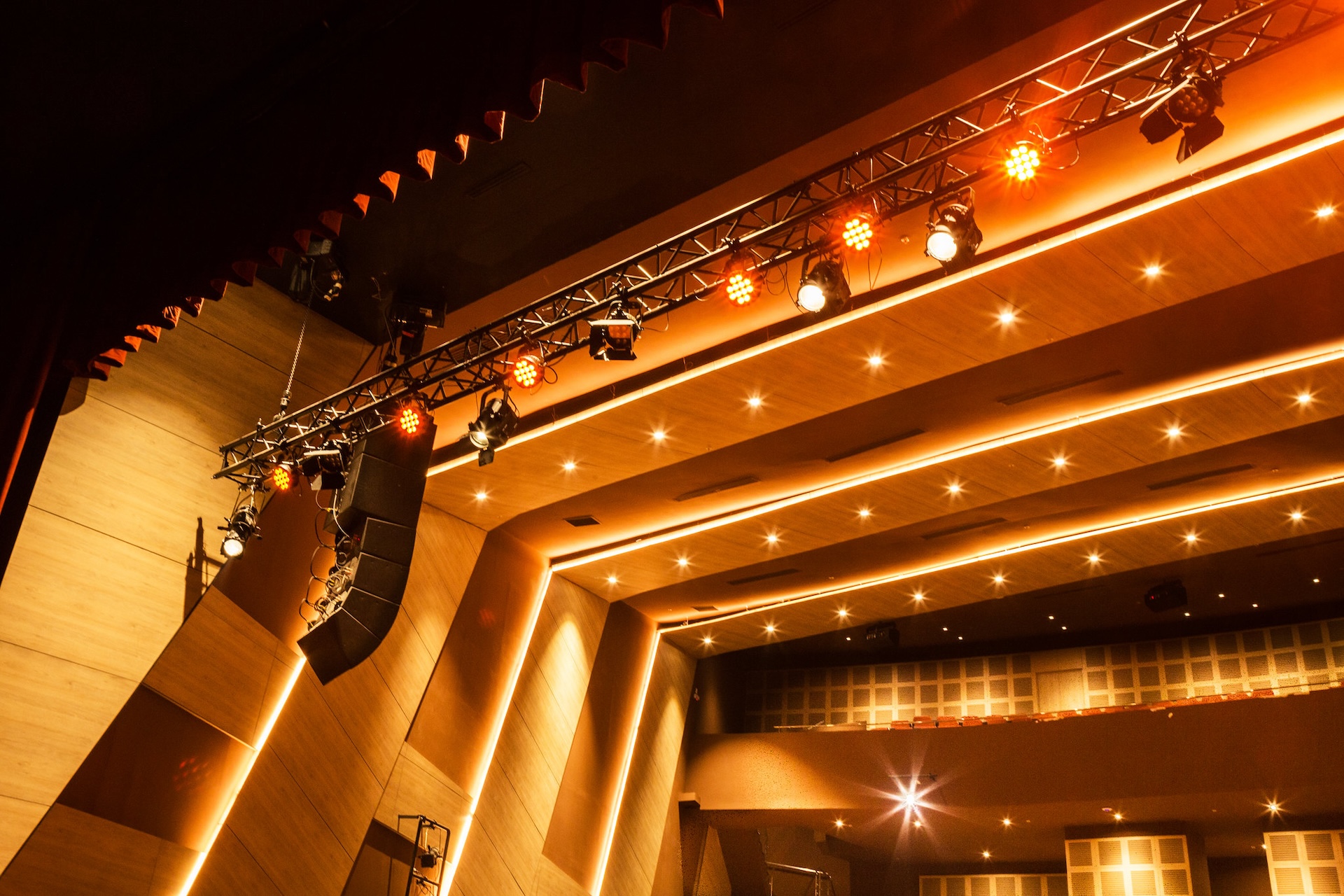
Step into the world of performances with this modern theater interior.
Noise pollution is a pervasive environmental issue that can have serious consequences for our health and well-being. Daily exposure to high levels of noise from traffic, construction, or industry leads to chronic stress responses. This unwelcome sound pollution has been linked to a slew of health problems including:
- Cardiovascular diseases
- Hearing impairment
- Sleep disturbances
- Negative effects on children’s learning and memory
Studies show living in consistently noisy environments increases our risk of hypertension and heart disease. It’s clear that controlling noise pollution is imperative for maintaining our community’s health.
Sound Therapy and its Benefits
On the flip side, intentional sound experiences, such as sound therapy, provide profound health benefits. Sound therapy uses various aspects of sound to improve our emotional and physical health. Methods like binaural beats and sound baths employ harmonic vibrations to induce relaxation and even pain relief. Research supports the healing power of sound therapy in contexts such as:
- Decreasing stress and anxiety levels
- Enhancing sleep quality
- Boosting mood and cognitive function
By integrating sound therapy into our wellness routines, we’re leveraging the harmonies around us for therapeutic gain.
ASMR: A Unique Sensation
Autonomous Sensory Meridian Response (ASMR) is a phenomenon where certain soft sounds and visuals trigger a tingling sensation on the scalp and neck, leading to deep relaxation. ASMR has skyrocketed in popularity, with countless videos and audio tracks engineered to evoke these feel-good tingles. Key elements of ASMR include:
- Whispering
- Tapping
- Crisp sounds
While the scientific exploration of ASMR is still in its infancy, anecdotal evidence points to its potential in combating issues like insomnia and stress. It’s an intriguing area that demonstrates the intricate ways sound influences our nervous system. Embracing the subtle power of ASMR could unlock new paths to tranquility in our sensory-rich world.
By understanding and respecting the duality of sound’s impact, we can design our lives and environments—like those at Design Lab—to encourage a healthier, more harmonious existence.
Conclusion
We’ve explored the intricate relationship between sound and human perception, revealing the profound influence it has on our daily lives. Our journey through psychoacoustics has shown us that sound is much more than a mere auditory experience—it’s a powerful tool that shapes our cognitive processes, emotions, and overall well-being. By harnessing the benefits of sound therapy and mindful design, we can create spaces that not only minimize the detrimental effects of noise pollution but also enhance our quality of life. Let’s embrace the insights from psychoacoustics to craft environments that resonate with our psychological needs, fostering a world where sound enriches rather than disrupts.
Frequently Asked Questions
What is psychoacoustics?
Psychoacoustics is the study of how humans perceive and interpret sounds, incorporating elements of psychology, acoustics, and neurology to understand the auditory experience.
How does the brain process sound waves?
The human auditory system converts sound waves into electrical signals that the brain processes, allowing us to not only detect noises but also comprehend the complexities and emotional impacts of those sounds.
Can certain sounds enhance concentration and relaxation?
Yes, specific soundscapes are designed to enhance concentration or relaxation, as background noise levels can significantly influence productivity and overall well-being.
How does ambient noise affect creativity and attention?
Moderate levels of ambient noise can stimulate creativity and enhance attention by providing a balanced auditory environment that can prevent distractions and foster a productive mindset.
Can sound frequencies and tempos improve memory recall?
Yes, certain frequencies and tempos have been shown to aid memory recall, suggesting that auditory stimuli can positively affect cognitive processes related to memory.
What role does sound play in education and learning?
Sound plays a critical role in learning and education by providing audio cues and using spatial audio techniques to improve understanding and retention of information.
Why is understanding psychoacoustics important?
Understanding psychoacoustics is essential for designing environments and products that meet psychological needs and support emotional well-being, tailored to how individuals interact with sound.
What are the health impacts of noise pollution?
Noise pollution can lead to a range of health problems, including cardiovascular diseases, hearing impairment, sleep disturbances, and can negatively affect children’s learning and memory capabilities.
What are the benefits of sound therapy?
Sound therapy has been found to decrease stress and anxiety levels, enhance sleep quality, boost mood, and improve cognitive function by utilizing sound’s therapeutic properties.
What is ASMR, and how can it be beneficial?
ASMR (Autonomous Sensory Meridian Response) is a phenomenon that triggers a relaxing tingling sensation through exposure to soft sounds and visuals and may help with issues such as insomnia and stress.
Our Portfolio

CM: When Technology Meets Creativity

Turning Stars into Experiences: The Remodeling of the Combarranquilla Planetarium by Schallertech

How Schallertech Transformed the Atlantic Museum into an Interactive Adventure

Innovation in Commercial Lighting: The Magic Behind the Verdi Project


Apartment in Barranquilla: Home Automation and Lighting

Mutis Auditorium at Rosario University. The Greatest Acoustic Challenge We Have Faced.


Chapel Hacienda Las Marías. The Evolution of Lighting in Worship Spaces

Table of contents