Table of contents
At Schaller Design Lab, we’re always on the cutting edge of audio technology. That’s why we’re excited to dive into the latest innovations in solid-state amplifiers. These powerhouses are revolutionizing the way we experience sound, and we can’t wait to share what’s new.
From enhanced audio fidelity to groundbreaking energy efficiency, solid-state amplifiers are hitting all the right notes. Join us as we explore how these advancements are setting the stage for an audio revolution.
The Evolution of Solid-State Amplifiers
Early Beginnings
In our journey through the history of solid-state amplifiers, we discover that their origins trace back to the 20th century. It was a time of rapid technological advancements where innovators were eager to overcome the limitations of vacuum tube amplifiers. Solid-state technology emerged as a potent solution, offering more reliability and better performance in a smaller package.
Vacuum tubes were prone to early wear and needed frequent replacements, whereas the solid-state counterparts boasted longer lifespans and rugged durability. Our exploration of these early beginnings reveals a groundswell of interest in developing amplifiers that were not only efficient but also less cumbersome and fragile than their predecessors.
Transistor Amplifiers
The introduction of transistors in the 1940s marked a significant milestone in the evolution of solid-state amplifiers. Transistors revolutionized electronic devices by replacing bulky and inefficient vacuum tubes. The amplifier landscape was transformed with the advent of these tiny yet powerful components that amplified sound with greater clarity and fidelity.
In the context of Design Lab’s dedication to cutting-edge audio technology, the innovation of transistor amplifiers aligns perfectly with our ethos of delivering high-quality sound experiences. The transition to transistors allowed us to promise our clients amplifiers that were not just smaller and more efficient but also provided a cleaner sound with less distortion.
Integrated Circuits and Miniaturization
The progression from discrete transistors to integrated circuits (ICs) signaled a new era of miniaturization and sophistication in amplifier design. Integrated circuits consolidated multiple electronic components into a single chip, dramatically reducing the size and complexity of amplifiers. This advancement facilitated the production of more compact and cost-effective solid-state amplifiers.
At Design Lab, miniaturization is not just about making things smaller; it’s about making them smarter and more accessible. Integrated circuits have enabled us to devise amplifiers that fit a variety of applications, from concert hall sound systems to portable consumer electronics. Our commitment is to harness these innovations to enhance the role of amplifiers in delivering impeccable audio quality across a multitude of platforms.
As we delve deeper into the transformative impact of integrated circuits, we see their influence in enabling seamless integration with modern digital technology, a step that continues to push the boundaries of what’s possible in sound amplification.
Advantages of Solid-State Amplifiers
Durability and Reliability

Experience the acoustic charm of a theater, a testament to the impact of sound technology.
Our exploration into the world of solid-state amplifiers unveils a significant advantage: durability. Gone are the days of fragile vacuum tubes; these contemporary marvels withstand physical shock and temperature extremes far better than their predecessors. Thanks to the solid-state design, these devices boast a much lower failure rate. Maintenance needs are minimal, making them the backbone in setups demanding unwavering performance—like those provided by Design Lab. Moreover, their consistent reliability ensures that they remain a staple in professional and consumer audio equipment alike.
Lower Power Consumption
Aside from robustness, solid-state amplifiers excel in efficiency. They require significantly less power to operate than tube amplifiers, which translates into lower electricity bills and less heat generation. Efficient power usage isn’t just about saving money; it also contributes to a greener, more sustainable world. Our amplifiers capitalize on this efficiency, enabling extended usage without the hefty environmental footprint—aligning perfectly with Design Lab’s commitment to eco-friendly solutions.
Compact Size
In the context of modern life, where space is at a premium, the compact size of solid-state amplifiers is another key benefit. Traditional tube amplifiers cannot compete with the slim, sleek profiles of modern solid-state models. This reduction in size is not just an aesthetic improvement but provides practical advantages such as portability and ease of installation. With Design Lab’s innovative technology, users can integrate powerful audio into their living or working spaces without dedicating significant real estate to bulky equipment.
Challenges in Solid-State Amplifier Design
Heat Dissipation
As we explore the robust world of solid-state amplifiers, it’s crucial to acknowledge the heat dissipation hurdle. Solid-state devices generate heat during operation—a challenge that must be managed effectively. Thermal management is key to ensuring the longevity and reliability of an amplifier. At Design Lab, we’ve witnessed this concern firsthand. Without proper heat sinks or cooling systems, amplifiers can overheat, leading to component damage or failure. Our ongoing development of advanced materials and cooling techniques has resulted in amplifiers capable of handling higher temperatures without compromising performance.
Linearity and Distortion
Another aspect we must tackle head-on is linearity. Solid-state amplifiers are expected to amplify signals without altering their waveform, but achieving this without any distortion is a complex task. While vacuum tube amplifiers are often lauded for their warm, natural sound, solid-state variants may introduce unwanted distortion if not designed with precision. At Design Lab, we engineer our amplifiers to minimize harmonic distortion and maintain clarity. Through meticulous circuit design and the implementation of negative feedback loops, we’ve been able to significantly reduce distortion levels, ensuring that our amplifiers produce a sound that’s both pure and powerful.
Power Efficiency
Lastly, let’s dig into power efficiency. The demand for energy-efficient devices has never been higher, and our amplifiers are no exception. We aim for a design that provides maximum output while drawing the least amount of power. Historically, solid-state amplifiers haven’t always been synonymous with energy efficiency. However, we at Design Lab have focused on optimizing power supply circuits and integrating smarter, more efficient components. By doing so, we not only address the environmental impacts but also enhance the portability and usability of our amplifiers, making them fit for a wide array of applications without the hefty power consumption.
Innovations in Solid-State Amplifiers
The realm of solid-state amplifiers is witnessing continuous innovation, with advancements that redefine the boundaries of audio technology. At Design Lab, we’re always on the cusp of these technological breakthroughs, integrating them into our products to deliver outstanding performance and audio purity.
Class D Amplifiers
The advent of Class D amplifiers marks a significant leap forward in the evolution of audio. Unlike traditional amplifiers that operate analog signals continuously, Class D amplifiers switch the output devices on and off rapidly, minimizing the time they spend in the high-current, high-heat dissipation state.
- They offer impressive energy efficiency, often above 90%, far exceeding Class A and Class AB counterparts.
- Their compact size makes them ideal for portable devices.
- With lower heat emission, they require minimal cooling systems.
At Design Lab, we’re utilizing these attributes to create amplifiers that not only conserve energy but also pack incredible power in a smaller footprint, without compromising on sound quality.
Digital Signal Processing
Digital Signal Processing (DSP) is revolutionizing how we approach sound amplification. DSP allows amplifiers to:
- Accurately shape and tailor audio signals in the digital domain before converting them to analog.
- Implement sophisticated crossover configurations, dynamic range controls, and equalization settings that would be complex or impossible in analog form.
- Correct nonlinearities and compensate for loudspeaker imperfections in real-time.
Design Lab integrates advanced DSP techniques to ensure that listeners get the most accurate audio reproduction, carving a sound that’s as close to the original recording as technically possible.
Wideband GaN Transistors
Recently, the use of Wideband Gallium Nitride (GaN) Transistors has elevated the performance of solid-state amplifiers. These transistors are the bedrock of high-speed, high-power-density amplifiers because:
- GaN transistors can operate at higher voltages and temperatures than silicon-based transistors.
- They have faster switching capabilities, essential for better high-frequency response.
- GaN transistors exhibit superior efficiency and can significantly reduce power losses.
Embracing GaN technology, Design Lab amplifiers deliver remarkably clean and dynamic audio fidelity, capable of driving speakers with crystal-clear highs and deep, articulate lows. Our use of these cutting-edge transistors underscores our commitment to pushing the boundaries of what’s possible in amplifier performance.
The Future of Solid-State Amplifiers
Hybrid Amplifiers
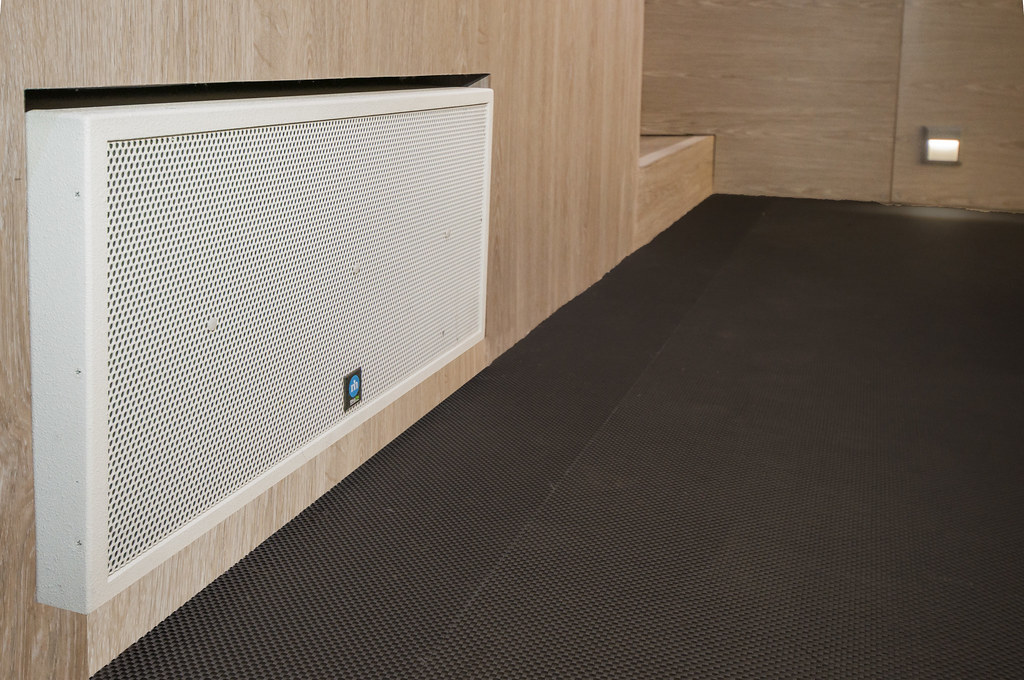
A glimpse into a modern space, showcasing the seamless integration of technology and design.
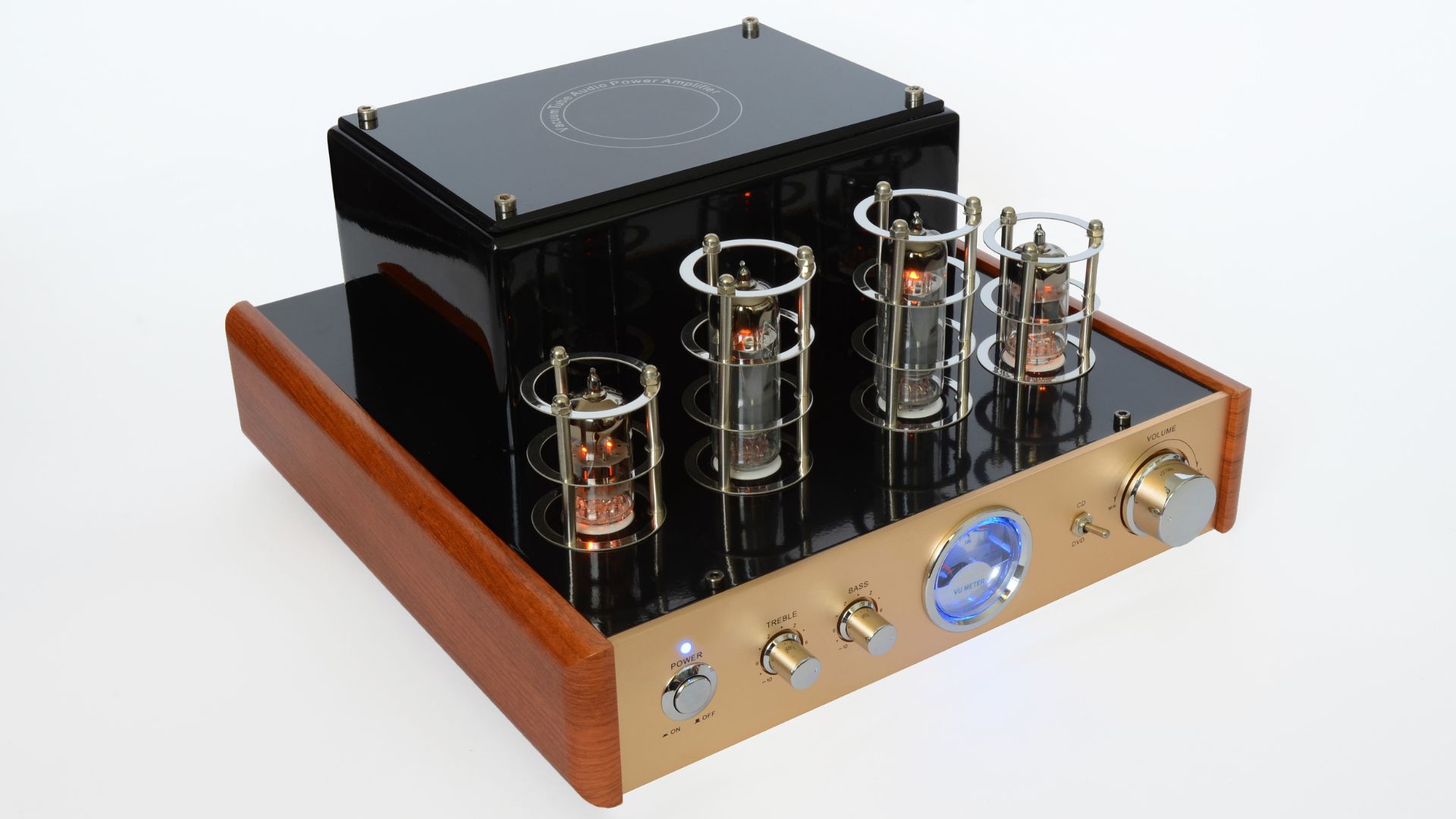
In the realm of audio fidelity, hybrid amplifiers have emerged as a groundbreaking strategy, blending the richness of vacuum tubes with the rugged efficiency of solid-state technology. Design Lab has been at the forefront of this innovation, engineering hybrid systems that deliver the warmth of traditional tube sound while utilizing the robust power and control of solid-state components. We harness the unique qualities of each technology to create an unparalleled audio experience. The key benefits of our hybrid amplifiers include:
- Enhanced sound quality through the combination of tube warmth and solid-state clarity
- High durability and lower maintenance needs
- Compact design that fits modern lifestyles
By fusing these two realms, our hybrid amplifiers stand as testimony to our commitment to audio excellence and innovation.
Wireless Power Transfer
Advancements in Wireless Power Transfer (WPT) technology have set the stage for a new era in solid-state amplification. Design Lab recognizes WPT’s potential to revolutionize the way we power devices, leading to amplifiers that are not only more efficient but also more convenient for our users. Our development in WPT solutions includes:
- Integration of WPT in our amplifier designs to reduce cable clutter
- Enhanced user experience with easy-to-use wireless systems
- Maintenance of high-efficiency standards despite the absence of traditional power cords
Implementing WPT allows us to create amplifier systems that push the boundaries of mobility and establish new standards for ease of use and installation. With substantial investments in research and practical applications of WPT in audio equipment, we’re paving the way to a wireless, interconnected audio environment that doesn’t sacrifice sound quality for convenience.
Conclusion
We’ve seen that solid-state amplifiers are not just surviving in the modern audio landscape but thriving with innovative leaps. By embracing advanced materials, cooling techniques, and smarter components, we’re witnessing a new era of amplifiers that are compact, energy-efficient, and produce unparalleled sound quality. Design Lab’s incorporation of Class D amplifiers, DSP, and GaN transistors represents a significant stride forward, ensuring that the audio experience is as pure as it is powerful. Looking ahead, the fusion of vacuum tube warmth with solid-state efficiency in hybrid systems and the integration of WPT technology are set to redefine what we expect from our audio equipment. It’s an exciting time for audiophiles and casual listeners alike as we stand on the cusp of an auditory revolution, thanks to these groundbreaking developments in solid-state amplification.
Frequently Asked Questions
What are the benefits of solid-state amplifiers over vacuum tube amplifiers?
Solid-state amplifiers offer greater durability and reliability, lower power consumption, and more compact designs. They require minimal maintenance and have a smaller environmental impact due to reduced electricity usage.
What challenges do solid-state amplifiers face and how has Design Lab addressed them?
Challenges include heat dissipation, linearity and distortion, and power efficiency. Design Lab tackled these with advanced materials, cooling techniques, meticulous circuit design, and smarter components, enhancing longevity and sound quality.
How do Class D amplifiers benefit portable devices?
Class D amplifiers are highly energy-efficient and small in size, making them suitable for portable electronic devices. They allow these devices to conserve energy while delivering powerful sound without compromising audio quality.
What is the role of Digital Signal Processing (DSP) in solid-state amplifiers?
DSP enables precise shaping of audio signals, correcting nonlinearities, and compensating for loudspeaker imperfections in real time. It allows for accurate audio reproduction and enhances overall sound quality in solid-state amplifiers.
How do GaN Transistors improve solid-state amplifier performance?
Wideband Gallium Nitride (GaN) Transistors operate at higher voltages and temperatures, have faster switching capabilities, and boast superior efficiency. They help deliver clean, dynamic audio fidelity in solid-state amplifiers.
What are hybrid amplifiers and how do they improve sound quality?
Hybrid amplifiers blend the warmth of vacuum tubes with the efficiency of solid-state technology. This combination offers enhanced sound quality with the durability and compact design advantages of solid-state systems.
How might Wireless Power Transfer (WPT) technology change solid-state amplifiers in the future?
WPT has the potential to revolutionize solid-state amplification by reducing cable clutter and enhancing the user experience, all while maintaining high-efficiency standards in the performance of the amplifiers.
Our Portfolio

Metropolitan Stadium: Clear and Powerful Sound with Renkus-Heinz Speakers


Art and Light: Contemporary Design in the SB Apartment

Turning Stars into Experiences: The Remodeling of the Combarranquilla Planetarium by Schallertech

Santa Cecilia de Logroño Church

Master Auditoriums at UniNorte: How Schallertech Created a 21st Century Learning Space




Table of contents