Table of contents
Valve amplifiers hold a mystique that’s hard to shake. At Schaller Design Lab, we’ve heard it all: “They warm up the sound!” or “Nothing beats that analog tone!” But what’s hype, and what’s the honest truth?
We’re here to debunk the myths and confirm the realities about these vintage audio icons. From the glow of the tubes to the weight of the sound, let’s dive into what really makes valve amplifiers a topic of endless discussion.
What is a valve amplifier?
The Basics of Valve Amplifiers
In our search for authentic audio fidelity, we’ve encountered numerous devices, but few carry the legendary status of valve amplifiers. Originating from a bygone era, these amplifiers harness vacuum tubes to boost electrical signals, directly impacting the sound we hear. Unlike their solid-state counterparts that rely on semiconductor tech, valve amps are known for their sonic signature and aesthetic appeal. The tubes themselves become a focal point, glowing warmly as they work their electrical magic.
At Design Lab, we understand the appeal of retro tech made relevant once more. Valve amplifiers have stood the test of time, not just as vintage objects, but as the heart of many high-fidelity sound systems. They’re credited for producing a rich, warm, and textured sound that’s hard to replicate with modern digital equipment. It’s the distinct tonal qualities and the hands-on interaction they require that set them apart.
How Do Valve Amplifiers Work?
Delving into the technical side of valve amplifiers, we find the vacuum tube at the core of their operation. These tubes control the flow of electrons in a vacuum, which, when modulated by audio signals, alter their density and speed. This modulation amplifies the input signal’s strength before it’s sent to the speakers, filling a room with sound.
It’s the inherent characteristics of vacuum tubes that give valve amps their unique sound. The tubes produce a harmonic distortion when pushed, which most enthusiasts find pleasing to the ear. This distortion is often gentle and less harsh than that which can be produced by solid-state amps, contributing to the perceived warmth in the audio output.
Electrons flow from a heated element called a cathode to a positively charged anode, within the vacuum tube. This process, known as thermionic emission, is what makes these amplifiers distinct from those that utilize transistors. With careful design and engineering, like that at Design Lab, valve amplifiers can effectively articulate the nuances of music, bringing forward details and depth that are sometimes lost with alternative technologies.
By embracing both the art and science of sound reproduction, valve amplifiers from Design Lab marry the nostalgia of the past with the precision of modern audio engineering. They are not just playing music; they’re recreating historical soundscapes with every note.
Common myths about valve amplifiers
Myth 1: Valve Amplifiers Are Outdated
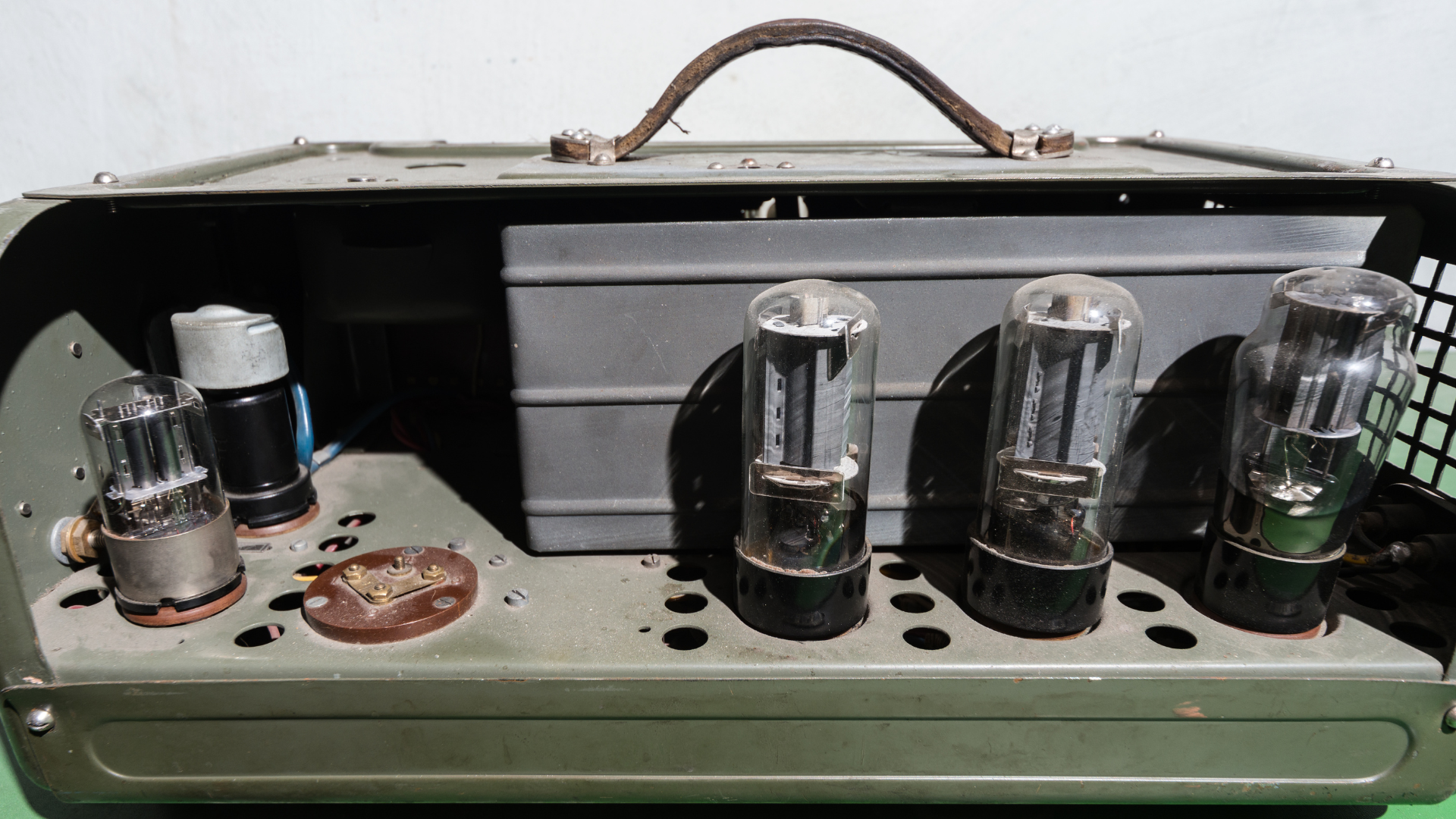
A peek into the past with this vintage electronic equipment, showcasing the iconic vacuum tubes.
Many believe that valve amplifiers are a relic of the past, but we’re here to set the record straight. These timeless pieces of technology continue to thrive in a modern landscape dotted with digital devices. Their design is indeed classic, but their performance remains unparalleled for many audiophiles. At Design Lab, we’ve seen firsthand the sustained demand for this ‘vintage’ tech—revered not only for nostalgia but for quality sound that stands the test of time. Renowned for their warm, full-bodied audio, valve amplifiers hold their ground firmly, even in an era dominated by the latest advancements.
Myth 2: Valve Amplifiers Are Less Reliable
There’s a common misconception that valve amplifiers are prone to failure and require frequent repairs. However, this couldn’t be further from the truth. In reality, valve amplifiers are robust machines. With proper care and periodic maintenance, they can provide decades of reliable service. Our experience at Design Lab confirms that with good upkeep, these units often outlast their solid-state counterparts. Thanks to their straightforward design and the availability of replacement parts, valve amplifiers can be easily serviced, ensuring longevity that’s tough to beat.
Myth 3: Valve Amplifiers Have Limited Power
When discussing valve amplifiers, some are quick to assume that they lack the power to drive modern speakers. It’s important to understand that power isn’t just about wattage—it’s about how that power is delivered to the speakers. Valve amplifiers excel in delivering smooth and responsive power, articulating every subtle nuance in the music. Their power output may not match the highest-rated solid-state units, but watt for watt, a valve amplifier can provide a richer and more dynamic audio experience. This highlights the efficacy of Design Lab’s approach to optimizing sound quality over mere numbers on a spec sheet.
Realities of valve amplifiers
Reality 1: Valve Amplifiers Produce Warmer Sound
We’ve learned through our experience at Design Lab that valve amplifiers have a dedicated following due to their characteristic sound. Vacuum tubes within these amplifiers foster a warmer, richer auditory experience. This warmth isn’t just anecdotal—valve amps actually enhance the soundstage, giving listeners the sense of being in a live setting. They excel at reproducing low-level details in music which solid-state amps often miss. The sound is often described as more natural and less harsh, making for a comfortable and immersive listening session that solid-state amplifiers rarely match.
Reality 2: Valve Amplifiers Offer High-Quality Audio
The high-quality audio from valve amplifiers isn’t just a result of the warm sound; these devices have superior harmonic distortion characteristics. Unlike transistor-based amps, the distortion from valves is musically pleasant. They introduce even-order harmonics that complement the original sound, leading to an enriched audio output that many audiophiles swear by. Here at Design Lab, we’ve noticed that valve amplifiers also have a distinct ability to reveal subtle nuances within music, crafting a soundscape that stays true to the recording’s original intention. Their responsiveness to dynamic changes in music ensures that every crescendo and decrescendo is faithfully articulated.
Reality 3: Valve Amplifiers Can Be More Expensive
It’s no secret that valve amplifiers often command a higher price than their solid-state counterparts. The reasons are multifaceted: manufacturing cost for vacuum tubes, the necessary transformers, and the handcrafted nature of many valve amp models. The components required for these amplifiers are high-grade and the craftsmanship involved in assembling them is meticulous. Our clients at Design Lab value the durability and longevity that a well-made valve amplifier brings, viewing the purchase as an investment in an enduring piece of audio equipment. While initial costs are indeed higher, the longevity and audio quality offered by valve amplifiers mean they frequently present better value over time.
Our insights into valve amplifiers at Design Lab underscore that, despite the myths, their appeal in the realm of high fidelity audio stands firmly on the realities of their performance characteristics and the quality of sound they deliver.
Understanding the benefits of valve amplifiers
Benefit 1: Depth and Clarity of Sound

Experience the intricate controls of a professional audio mixing console, a testament to the evolution of sound technology.
One of the most recognizable benefits of valve amplifiers is their unparalleled depth and clarity of sound. These amplifiers produce a rich, full-bodied audio that solid-state amps often struggle to match. The sound is characterized by a natural warmth, making the listening experience more immersive. Valve amps excel at delivering detailed audio and are particularly celebrated for their ability to articulate midrange frequencies, which is where the human ear is most sensitive.
Benefit 2: Versatility and Flexibility
Valve amplifiers offer a level of versatility and flexibility that appeals to audio purists and musicians alike. Their circuitry welcomes modifications and tweaks, allowing for customization in sound quality or to better match the acoustics of a room. They also pair exceptionally well with a wide range of speakers and can seamlessly switch from powering a delicate vintage speaker set to driving modern high-fidelity units. This adaptability ensures that valve amplifiers can evolve with changing audio setups and preferences.
Benefit 3: Aesthetics and Craftsmanship
The visual appeal of valve amplifiers can’t be overstated. With glowing tubes and often handcrafted construction, these pieces stand out as works of art within your audio system. Manufacturers and boutique shops like Design Lab prioritize aesthetics and craftsmanship, resulting in beautiful pieces that serve as a focal point in any room. The meticulously crafted components aren’t just for looks either; they contribute to the superior sound quality and exemplify the care that goes into the creation of every amplifier.
Conclusion
We’ve journeyed through the captivating world of valve amplifiers, dispelling myths and uncovering the realities that make them timeless treasures in audio. They’re not just about warm tones or vintage charm; they bring a depth and clarity to music that’s hard to replicate. For audiophiles seeking that authentic sound or anyone appreciating exquisite craftsmanship, valve amplifiers offer an experience that goes beyond mere listening. They’re an investment in sonic excellence, proving that some classics never fade. Let’s cherish the rich, enveloping soundscapes that only valve amplifiers can provide, and keep the legacy of high fidelity audio alive and thriving.
Frequently Asked Questions
What is a valve amplifier and why is it unique?
Valve amplifiers, or tube amps, use vacuum tubes to amplify electrical signals, offering a distinctive tonal quality that’s often described as warm and rich. They’re sought after for their ability to articulate music nuances and create a vintage soundscape.
How do valve amplifiers work?
Valve amplifiers work by modulating an electrical signal’s electrons within vacuum tubes. This modulation can introduce harmonic distortion which some listeners find pleasing, as it adds character to the sound.
Are valve amplifiers outdated technology?
No, despite being an older technology, valve amplifiers are not outdated. They remain popular among audiophiles and musicians due to their unique sound qualities and aesthetic appeal.
Can valve amplifiers provide reliable performance?
Yes, valve amplifiers can be very reliable. With proper care and maintenance, they can provide reliable service for decades.
Are there any common myths about valve amplifiers?
Yes, common myths include the belief that valve amplifiers are outdated, unreliable, and have limited power. These are misconceptions; valve amps are cherished for their sound quality and can perform robustly with adequate power.
What are the benefits of using a valve amplifier?
Benefits of using a valve amplifier include unparalleled depth and clarity of sound, versatility in creating different sonic textures, and the aesthetic craftsmanship that renders them as much a piece of art as an audio component.
Do valve amplifiers improve audio experience?
Yes, valve amplifiers can greatly improve the audio experience by delivering smooth and responsive power, enhancing the overall sound with their tonal richness and dynamic responsiveness.
Our Portfolio

Casa PC: Design, Entertainment, and Technology

Santa Cecilia de Logroño Church



Turning Stars into Experiences: The Remodeling of the Combarranquilla Planetarium by Schallertech

Master Auditoriums at UniNorte: How Schallertech Created a 21st Century Learning Space

Lighting that Inspires: An Exceptional Design Project


Smart and Exceptional Design: TC Project

Table of contents