Table of contents
At Schaller Design Lab, we understand that the backbone of any great recording is stellar studio acoustics. It’s what separates amateur recordings from professional ones. We’ll dive into how acoustics can make or break your sound, ensuring you’re well-equipped to capture crystal-clear audio every time. Stay tuned as we unravel the secrets behind optimizing your recording space for the best sound quality possible.
Importance of Recording Studio Acoustics
Enhancing Sound Quality
When we talk about top-tier recordings, the clarity and richness of the sound are non-negotiable. That’s where Design Lab steps in; our expertise ensures that sound quality becomes a foremost priority in any recording studio setup. To enhance sound quality within a recording space, we focus on acoustic treatments that control sound reflections, effectively reducing standing waves and flutter echoes. These treatments are essential to provide a pristine sonic environment, enabling recordings to capture true sound without unwanted coloration.
Our approach incorporates strategic placement of acoustic panels, bass traps, and diffusers throughout the studio to ensure even sound distribution. The goal is to create a balanced acoustic space where sounds are crisp, clear, and accurate. The result is a recording that delivers the authentic intention of the artist or speaker, which translates into a more immersive and engaging listening experience for the audience.
Minimizing Distortion
Distortion is the enemy of any professional recording. At Design Lab, we’ve seen how neglected acoustics can lead to an array of audio issues which compromise the integrity of the final product. That’s why our designs focus on minimizing distortion to enhance the listener’s engagement with the material.
Well-designed studio acoustics make sure that direct sound reaches the microphones without being colored by reflections off walls, ceilings, and floors. This ensures that what’s recorded is a pure representation of the source. By managing reflections, we also prevent phase cancellations, a phenomenon that occurs when sound waves interfere with each other, leading to a hollow or flattened sound. With the right treatment, we can preserve the warmth and fullness of the original audio, ensuring that every recording has the depth and clarity that professionals seek.
The use of absorptive materials along with calculated spacing of elements within the studio space means that reverberation times are kept within the ideal range. This precise control over the acoustic environment empowers the smooth capture of every nuance in a performance, resulting in a final mix that stands out for its clarity and fidelity.
Understanding Acoustic Principles
Reflection
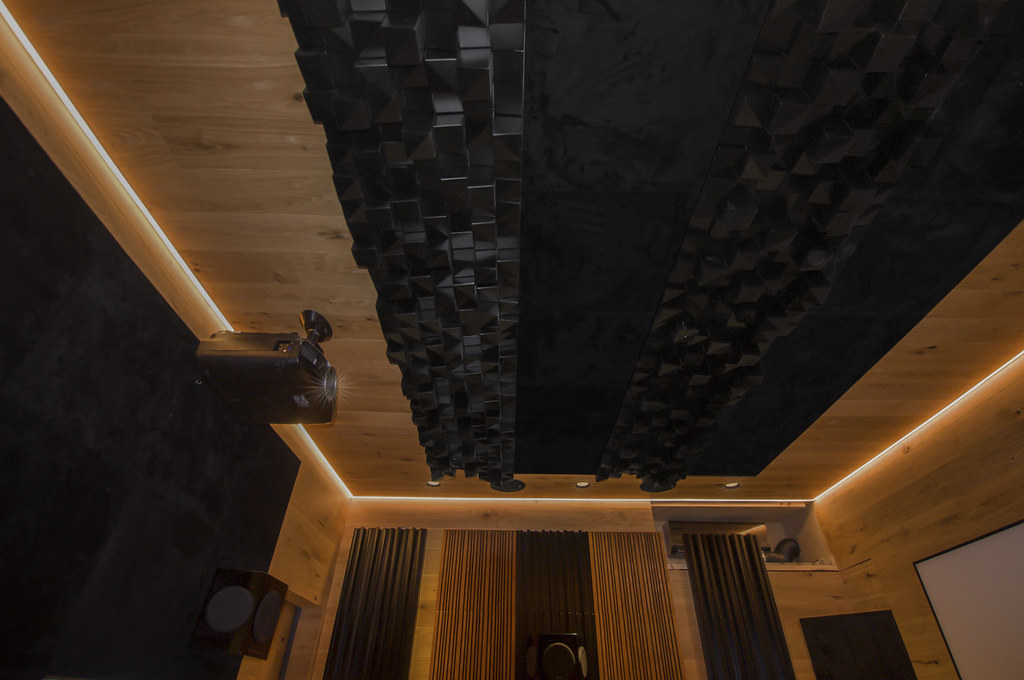
Step into the world of superior sound with this modern studio, featuring specialized acoustic design for pristine audio experiences.
In recording studio acoustics, reflection plays a pivotal role in shaping the sound within a space. It’s the phenomenon where sound waves bounce off surfaces, such as walls, ceilings, and floors. In our Design Lab studios, we’ve observed that untreated reflective surfaces may cause undesirable effects like echo. However, when managed correctly, reflection can be utilized to enhance sound clarity. This careful balance is achieved by strategically placing surfaces that direct sound waves effectively—ensuring that what’s captured by microphones is as close to the original performance as possible.
Absorption
Absorption is another cornerstone of acoustic treatment in our studios at Design Lab. It involves installing materials that convert sound energy into heat, effectively reducing the energy of sound waves as they interact with surfaces. Our choice of absorptive materials is guided by their Noise Reduction Coefficient (NRC) ratings, with factors such as thickness, density, and surface texture playing a role in their effectiveness. Accurate absorption reduces reverberation times and controls the ambient sound level, making it essential for obtaining a clear and direct recording.
Diffusion
Lastly, diffusion is a principle that scatters sound across various directions, preventing the creation of acoustic ‘hot spots’ or dead zones. In Design Lab’s acoustical approach, we implement strategic diffusive elements to promote an even distribution of sound throughout the recording environment. This assures a natural-sounding space and a more consistent listening experience, regardless of the listener’s position in the room. Our use of diffusive designs, from quadratic residue diffusers to polycylindrical diffusers, ensures that talent and equipment capture pristine sound that’s full of life.
Designing a Proper Recording Studio Space
As experts at Design Lab, we understand that every aspect of recording studio construction contributes to the sound quality. From the geometry of the room to its materials, each detail matters.
Room Size and Shape
Our studio designs begin with a careful consideration of room size and shape. We aim for dimensions that prevent standing waves, where low-frequency sounds reinforce or cancel each other out. Ideal room shapes are non-parallel to avoid flutter echoes and to maintain sound consistency. Rectangular rooms with the ratio of the Golden Mean (1:1.618) are preferred as they naturally help to achieve better acoustic quality.
Wall Construction
Walls are the backbone of proper studio acoustics. At Design Lab, we pay special attention to building walls that not only isolate the studio from external noise but also effectively manage internal sound reflections. Double walls with an air gap, solid mass, and decoupling techniques are integral to ensure soundproofing while maintaining acoustic integrity within the studio.
Flooring and Ceiling Materials
The choice in flooring and ceiling materials impacts sound absorption and reflection. We generally recommend dense carpeting or specialized acoustic flooring to minimize floor reflections. For ceilings, we often opt for acoustic tiles or pliable materials that aid in absorbing sound and eliminating standing wave issues. Both elements work in harmony to create a balanced acoustic environment.
Placement of Acoustic Treatment
Strategic placement of acoustic treatments can make or break a studio’s sound quality. Our approach at Design Lab incorporates:
- Absorption panels at reflection points for clearer sound imaging
- Bass traps in corners to manage low-frequency build-up
- Diffusers spread strategically to break up standing waves and provide an even sound distribution throughout the room
We integrate these treatments keeping both aesthetics and functionality in mind, ensuring the space not only sounds professional but also inspires creativity.
Choosing the Right Acoustic Treatment
When outfitting a recording studio, selecting the right acoustic treatments makes all the difference. In our quest for impeccable sound quality, these elements are non-negotiable. Here’s a look at how each type of treatment works to enhance your studio’s acoustics.
Bass Traps
Bass traps are essential in managing low-frequency sounds that tend to accumulate in corners and can cause significant audio distortions. At Design Lab, we’ve learned that the right bass traps can –
- Target a Range of Frequencies: They’re not just for bass; they also handle complex, low-mid frequencies.
- Placement: Strategic placement is critical, usually in corners where bass tends to build up.
Moreover, the effectiveness of bass traps is markedly noticeable in tightening the sound and contributing to a clear mix.
Diffusers
Diffusers serve to scatter sound waves, leading to a more open and natural sound within the studio. Their role is crucial in avoiding dead spots and overly pronounced reflections that can smother the life out of a recording. At Design Lab, we rely on diffusers to:
- Ensure an Even Sound-field: This creates a more balanced listening environment.
- Enhance the Spatial Characteristics: They add an airy dimension to the room’s acoustics.
The careful implementation of diffusers adds depth and clarity to your recordings, something that cannot be understated.
Absorbers
Absorbers tackle the issue of unwanted reflections, effectively improving vocal and instrument clarity. Our installations at Design Lab typically entail:
- Various Thickness and Material Types: This variation helps absorb different frequencies.
- Surface Coverage: Full-wall versus strategic placement can vastly change the sound dynamics.
The precise use of absorbers is key to managing echo and reverb, ensuring your recordings are crisp and clean.
Reflectors
While absorption and diffusion are critical, reflectors are used to fine-tune a room’s acoustics. Reflectors help control the sound’s directionality and preserve the energy within the room. Factors that go into their use include:
- Material Selection: Hard surfaces reflect sound; the choice of material influences the quality of reflection.
- Angles and Placement: These define how sound waves are redirected throughout the space.
In essence, achieving a harmonious blend of reflectivity can add that dynamic vibe to your studio, vital for a vibrant recording environment.
By incorporating these acoustic treatment methods, the studio takes on a character that’s conducive to professional-grade audio excellence. We at Design Lab understand that each element plays a pivotal role in crafting the ultimate acoustic space for high-fidelity recordings.
Optimizing Studio Monitor Placement
Speaker Positioning
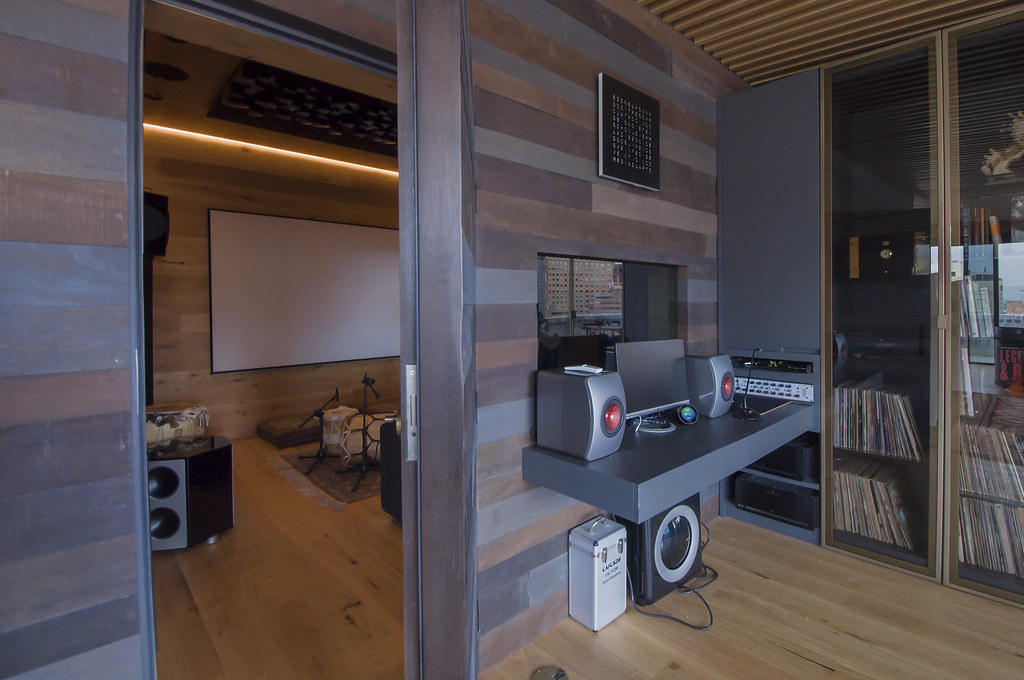
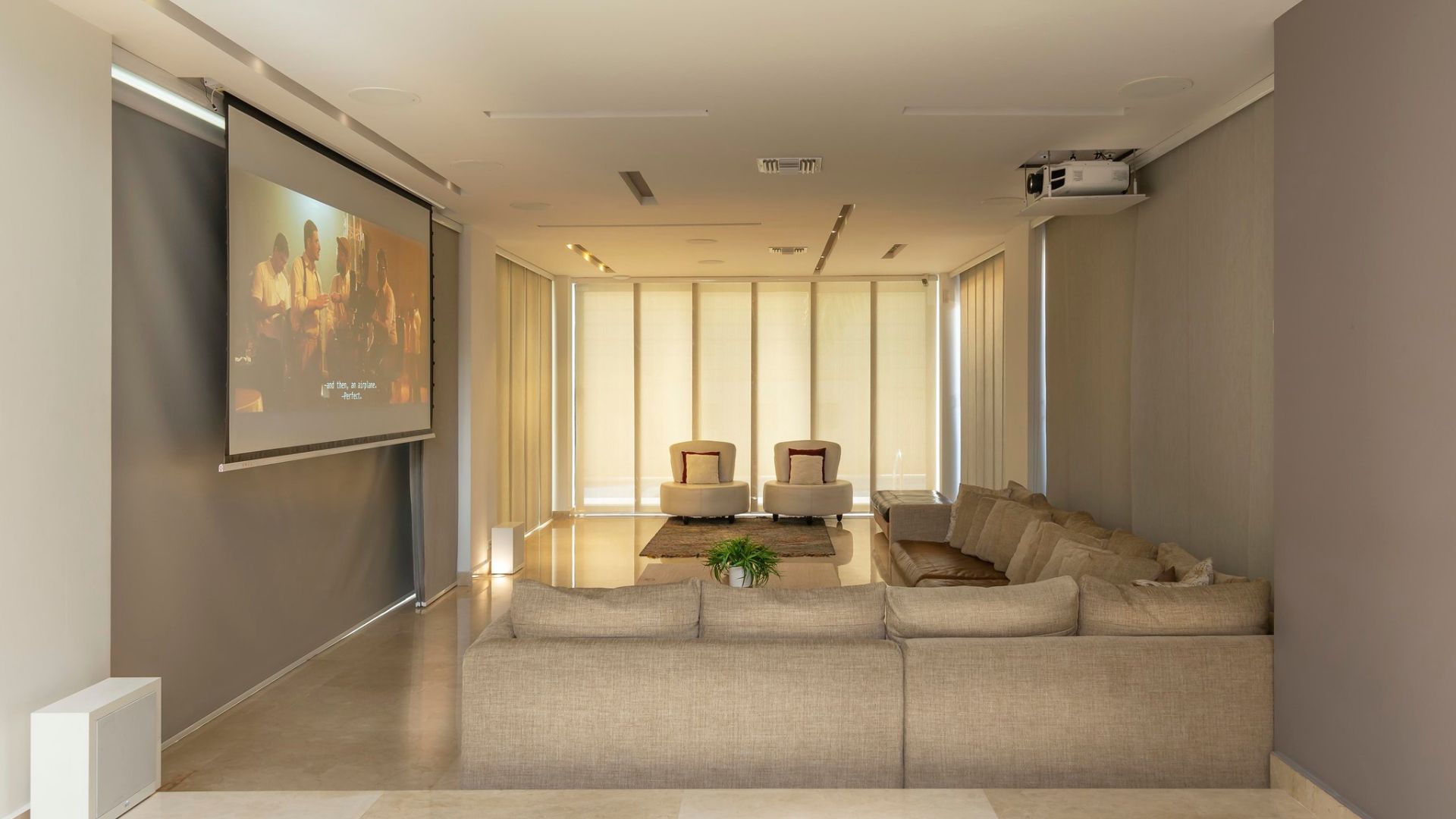
Step into the world of superior sound with this modern audio-visual room, featuring sophisticated audio equipment and a large projection screen.
In our Design Lab studios, we understand that where you place your speakers can have a profound impact on the sound quality within the recording environment. To achieve a crystal-clear listening experience, we ensure speakers are positioned to form an equilateral triangle with the listening spot. This setup guarantees that the sound from each monitor arrives at the listener’s ears simultaneously, providing an accurate stereo image.
Our expert team places studio monitors so tweeters are at ear level, which ensures high frequencies are directed straight to the listener. We also focus on speaker isolation. To minimize unwanted vibrations and subsequent sound coloration, we utilize isolation pads or stands for all our studio monitors.
Listening Spot Positioning
Positioning the listening spot is as critical as the speaker placement itself. We aim for a sweet spot, where the sound converges optimally for the listener. In our Design Lab, we position the listening area at around 38% the length of the room from the front wall. This strategy avoids standing waves and nodes that can distort what the listener hears.
Adjustments to the listening position account for room anomalies, helping us create a balanced listening environment. Our consistency in maintaining these standards across all our studios allows us to promise exceptional sound quality and a true auditory representation of the recordings.
Conclusion
We’ve seen firsthand how critical studio acoustics are to achieving the pristine sound quality every audio professional strives for. Through careful acoustic treatment and strategic monitor placement, we can transform any recording space into a sonic haven. It’s about more than just aesthetics; it’s about precision and the pursuit of acoustic perfection. Our commitment to a balanced listening environment ensures that the music we produce resonates with clarity and depth. Let’s continue to set the standard for excellence in audio production, one studio at a time.
Frequently Asked Questions
What is the importance of studio acoustics according to the article?
Studio acoustics are crucial for creating high-quality recordings. The article explains that proper acoustic treatment and sound control lead to better sound quality in a recording environment.
What are the key acoustic treatments mentioned in the article?
The article mentions several acoustic treatments such as controlling sound reflections, absorption, diffusion, and managing the directionality of the sound within the studio.
How does optimizing studio monitor placement affect sound quality?
Optimizing studio monitor placement is essential for achieving clear sound. Proper positioning can significantly enhance the listening experience by ensuring that sound waves reach the listener’s ears in the most effective way.
Why is the positioning of the listening spot significant?
The positioning of the listening spot is significant because it needs to be adjusted to create a balanced listening environment. This ensures that the audio is accurately heard from the intended focal point, leading to better sound assessment and recording quality.
What ultimate goal does Design Lab aim to achieve with its audio strategies?
Design Lab aims to create a professional-grade audio environment that is optimal for high-fidelity recordings by incorporating strategic acoustic treatments and precise speaker and monitor placement.
Our Portfolio

Universidad del Atlantico Theater: A Legacy of Technological and Cultural Innovation

Residential Design Casa JC: Sophistication and Technology
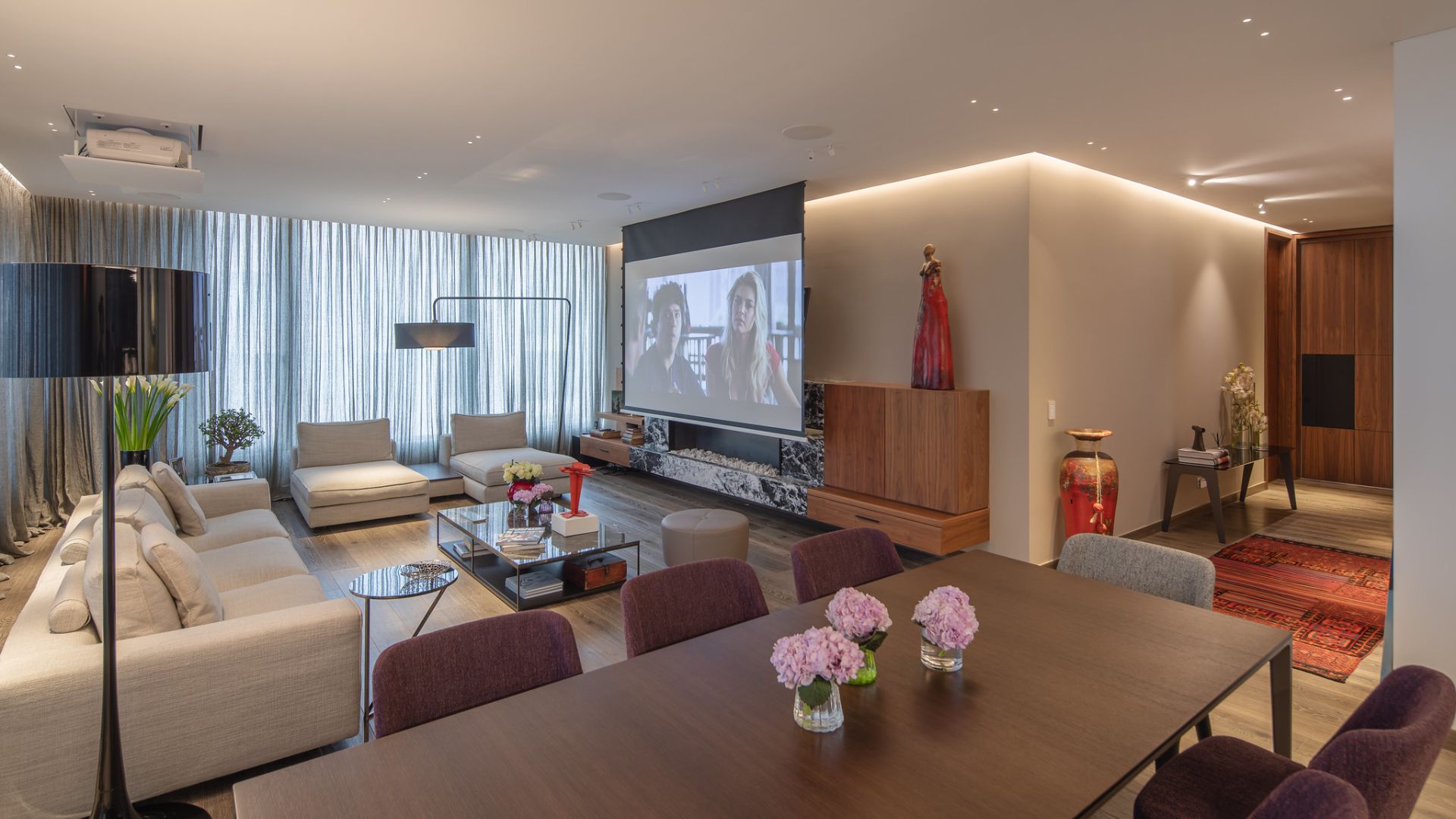

Innovation in Commercial Lighting: The Magic Behind the Verdi Project



Lighting that Inspires: An Exceptional Design Project

Chapel Hacienda Las Marías. The Evolution of Lighting in Worship Spaces

Turning Stars into Experiences: The Remodeling of the Combarranquilla Planetarium by Schallertech
Smart and Exceptional Design: TC Project
Table of contents