Table of contents
At Schaller Design Lab, we understand that sound quality can make or break any space. That’s why we’re delving into the NRC parameter, a key player in acoustics that’s often overlooked.
NRC, or Noise Reduction Coefficient, is the magic number that tells us how well a material can absorb sound. Stick with us as we unpack its significance and why, when it comes to designing spaces with perfect acoustics, NRC shouldn’t be ignored.
What is NRC?
When we talk about acoustics, NRC stands front and center as one of the key metrics for sound absorption. NRC, or the Noise Reduction Coefficient, quantifies the ability of a material to absorb sound on a scale from 0 to 1. Materials with an NRC close to 1 have a high capacity for absorbing sound, whereas materials with an NRC nearer to 0 reflect most of the sound that strikes them.
At Design Lab, we leverage our deep knowledge of NRC to inform every project. It’s vital to select the right materials for your space to ensure clear sound quality and effective noise control. For example, ceiling tiles and wall panels often boast an NRC rating; those with higher ratings are typically better suited for environments like recording studios, conference rooms, and educational spaces where clear acoustics are paramount.
Understanding NRC is also crucial for reducing noise pollution in various settings. Here’s how we break down the utility of high NRC-rated materials:
- They enhance speech clarity and privacy.
- They contribute to a more focused and productive environment.
- They decrease stress and enhance overall comfort.
In choosing materials for a sound-sensitive environment, we consider their NRC alongside other factors such as durability, aesthetics, and fire resistance. Sound absorption is not a one-size-fits-all scenario—each room and its intended use demand a tailored approach. With this in mind, we carefully curate materials that meet the specific NRC requirements for each unique situation.
Monitoring the performance of sound-absorbing materials is part of our continuous commitment at Design Lab. Our selections are guided by rigorous testing and industry standards, ensuring that NRC values are not just theoretical but providing real-world benefits. Sound quality in any space should not be left to chance, thus integrating the right NRC-rated materials into the design is not just a recommendation but a necessity for optimal acoustic performance.
Understanding Acoustics
The Science of Sound
Sound is a form of energy that travels through the air as vibrations or waves. These waves are captured by our ears and translated by our brains into the sounds we hear. Within the realm of acoustics, sound can be better understood by its two main components: frequency and amplitude. Frequency refers to the number of sound wave cycles per second, measured in hertz (Hz), and it determines pitch. Amplitude, measured in decibels (dB), is the perceived loudness of sound. When designing spaces with acoustics in mind, grasping these concepts is crucial.
Materials absorb, reflect, or scatter sound waves to varying degrees, and this interaction dramatically affects a space’s acoustic quality. We at Design Lab thoroughly assess these characteristics to recommend materials with optimal NRC ratings that align with the desired acoustic environment.
For example, in a recording studio, we’d look for materials with high sound absorption to prevent echo and background noise, ensuring pristine recording quality. In contrast, a bustling cafe may require a balance of absorption and reflection to maintain a lively yet intelligible atmosphere.
Applications of Acoustics
The applications of acoustics are vast, influencing environments across different sectors. Look around and you’ll notice acoustics at play in almost every facet of life. We have identified a few key areas where proper acoustic design is pivotal:
- Educational Spaces: Classrooms with superior acoustic design promote learning and comprehension. Children, especially those with hearing difficulties, benefit from reduced background noise, which allows for clear communication with teachers and peers.
- Healthcare Facilities: Patient recovery rates improve in hospitals with tailored acoustic solutions that minimize stress-inducing noise levels. Privacy in consultation areas is respected, and effective communication between healthcare professionals and patients is facilitated.
- Offices and Workspaces: In the corporate world, productivity and employee well-being are boosted when acoustic comfort is prioritized. Open-plan offices, meeting rooms, and even break areas require specific acoustic considerations to reduce distractions and enhance speech intelligibility.
- Entertainment Venues: Cinemas, theaters, and concert halls demand meticulous acoustic planning. Here, it’s not simply about sound absorption but the precise distribution and quality of sound to provide the best auditory experience for the audience.
In each application, there’s no one-size-fits-all solution; acoustics must be customized to serve the unique needs of the environment. Whether it’s focusing on sound clarity for lectures or balancing the buzz of crowd chatter in a restaurant, Design Lab has the expertise to manipulate acoustics to create comfortable, functional, and thriving spaces.
The Importance of the NRC Parameter
Definition and Calculation
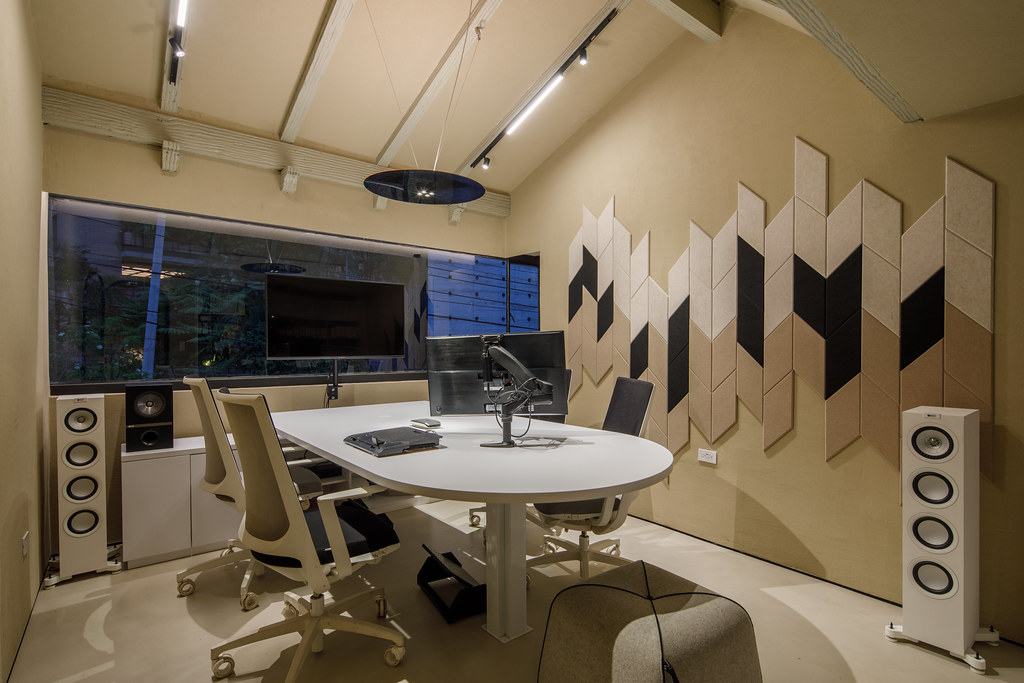
Step into the future of sound design with this modern recording studio, where every detail is meticulously crafted for optimal acoustics.
When considering the acoustics of a space, the Noise Reduction Coefficient (NRC) is a pivotal metric. NRC represents a material’s ability to absorb sound, measured as an average rating of how much sound a material can soak up at frequencies 250, 500, 1000, and 2000 Hz. These frequencies represent the range of human speech, an essential consideration in many architectural environments. The calculation involves a simple mathematical average of absorption coefficients at these specified frequencies, resulting in a number between 0 and 1. An NRC of 0 means the material reflects all sound, while an NRC of 1 indicates complete sound absorption. At Design Lab, we meticulously analyze these figures to provide you with the most effective acoustic solutions.
Impact on Room Acoustics
Selecting materials with the right NRC is crucial to achieving excellent room acoustics. In fact, it directly impacts the sound quality within a space. For instance, a room designed for musical performances would benefit greatly from materials with a high NRC rating, reducing echo and reverberation, thus enhancing the listening experience. On the other hand, an area like a cafeteria may require a balanced approach to manage noise levels without making the space too deadened. Beyond speech and music, NRC-optimized materials can also reduce the strain of background noise, fueling concentration and comfort in environments such as libraries and office spaces.
Role in Design and Construction
Incorporating NRC ratings into the design and construction phases is fundamental for creating acoustically optimized environments. This integration of sound absorption considerations begins at the blueprint stage and continues through the selection of materials and construction techniques. Our choices in materials bear the weight of aesthetic appeal, functionality, and acoustical performance. At Design Lab, we use high NRC-rated materials strategically, not only for their sound-absorbing capabilities but also for their contribution to the overall design aesthetic. Rigorous testing and adherence to industry standards reinforce our commitment to combining form with function, ensuring the spaces we craft meet the acoustic demands of their intended use.
Factors Affecting the NRC Value
Material Selection
When selecting materials, we prioritize those with the right NRC values to target specific sound frequencies. Denser materials often reflect sound, resulting in a lower NRC, while porous materials like foam or fibers absorb sound and typically have a higher NRC. It’s not just about selection, though; placement is crucial. At Design Lab, we meticulously choose materials that balance acoustical properties with other factors:
- Durability: We ensure that materials can withstand the intended use without compromising acoustic performance.
- Aesthetics: We select materials that complement the visual design while maximizing their sound-absorbing qualities.
- Fire Resistance: We’re committed to picking materials that meet safety regulations without sacrificing sound absorption.
Room Geometry
The shape and size of a room significantly influence the NRC value of the space. Here’s why:
- Sound Reflection Points: We consider where sound waves are likely to bounce and where they can be absorbed effectively.
- Diffusion: We strategically use materials and design elements to scatter sound waves, reducing focal points of reflection.
Our team at Design Lab incorporates these factors into our blueprints to optimize room geometry for acoustical performance.
Surface Finish
The surface finish of materials directly affects how sound waves interact with them. Here’s what we’ve observed:
- Texture: Rough surfaces tend to scatter sound waves, which can enhance absorption.
- Perforations: Materials with perforations or patterns can trap sound waves, potentially raising their NRC value.
We fine-tune the balance between surface finish and overall acoustical goals to ensure the desired acoustic outcomes.
Designing for Desired NRC
Selecting Suitable Materials
In achieving optimal NRC values, selecting the right materials is paramount. At Design Lab, we’re well-versed in identifying materials that not only meet the desired NRC ratings but also complement the intended use of the space. For example, soft, porous materials like fiberglass and mineral wool offer high NRC values and are superb for sound-sensitive environments. In contrast, denser materials like wood or heavy rubber, while providing some level of sound absorption, might be better suited for areas where durability takes precedence. We prioritize materials that strike the right balance, ensuring every design we produce meets the acoustical and functional needs of the space.
Incorporating Absorption Solutions
Once materials are selected, we focus on incorporating absorption solutions that elevate the overall acoustic quality. This involves integrating features such as acoustic ceiling tiles, wall panels, and carpeting, each with its NRC rating tailored to the room’s requirements. Design Lab trusts in using scientifically proven techniques to maximize sound absorption. In gathering spaces like auditoriums, we might incorporate fabric-wrapped acoustic panels to both enhance the aesthetics and acoustics. Similarly, in recording studios, we layer materials strategically to handle various frequencies, ensuring every note is captured as intended.
Effective Placement of Acoustic Panels
The NRC value of a material can only be fully realized with effective placement. It’s not just about hanging acoustic panels; it’s about positioning them where they’ll do the most good. At Design Lab, we analyze a room’s geometry, considering reflection points and sound diffusion principles to determine optimal placement. For instance:
- In a conference room, we’ll place panels on walls at the height of seated occupants to catch and absorb direct sound waves.
- In open office spaces, strategic panel placement can create ‘sound zones’ to enhance privacy without disrupting the flow of the workspace.
By focusing on these placement strategies, we ensure that our acoustic solutions are not just effective but also enhance the visual and practical aspects of a space. Such attention to detail is what sets Design Lab’s designs apart, combining form and function to craft spaces where sound quality contributes to comfort and productivity.
NRC Parameter in Different Environments
Auditoriums and Concert Halls
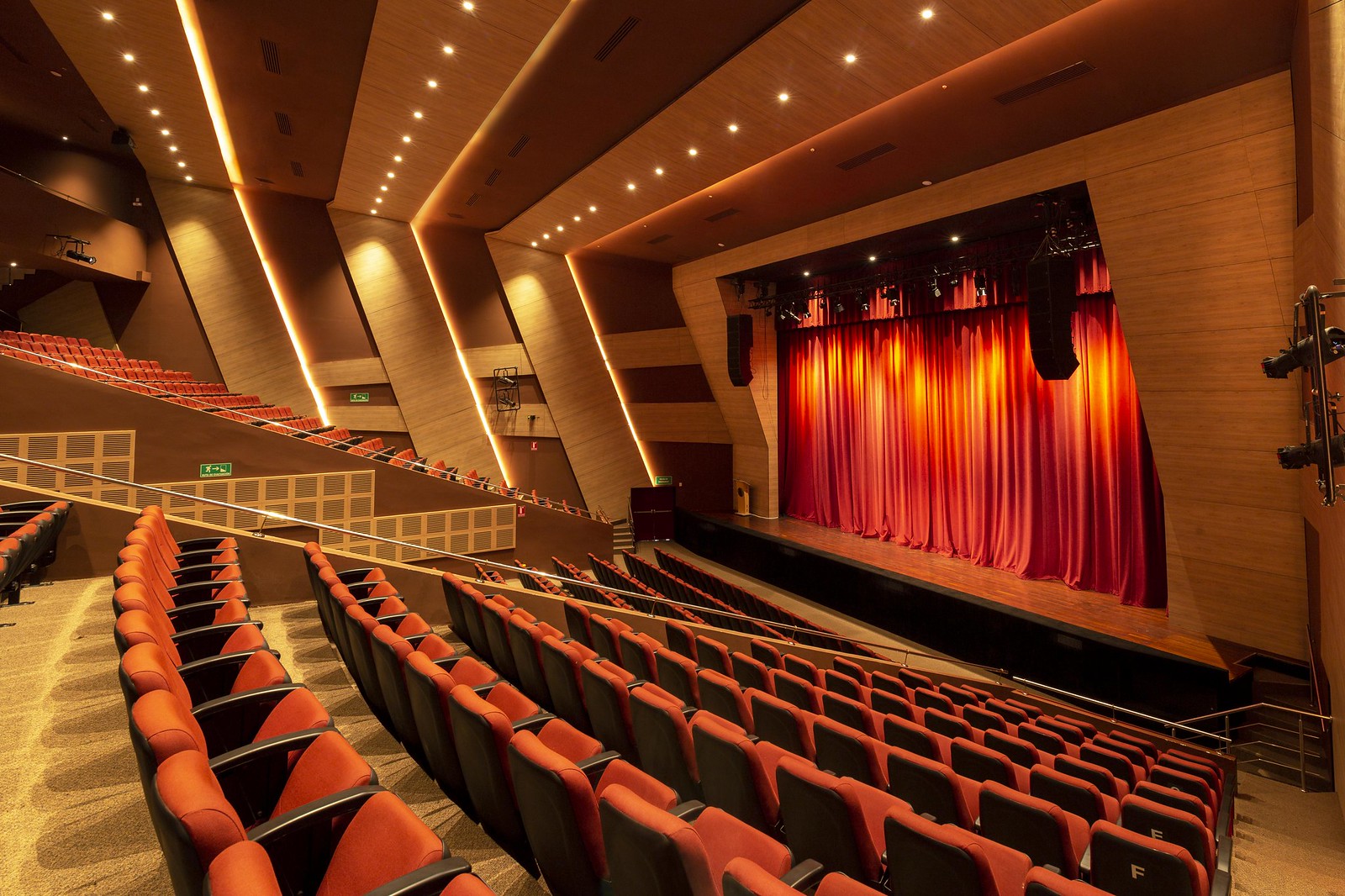
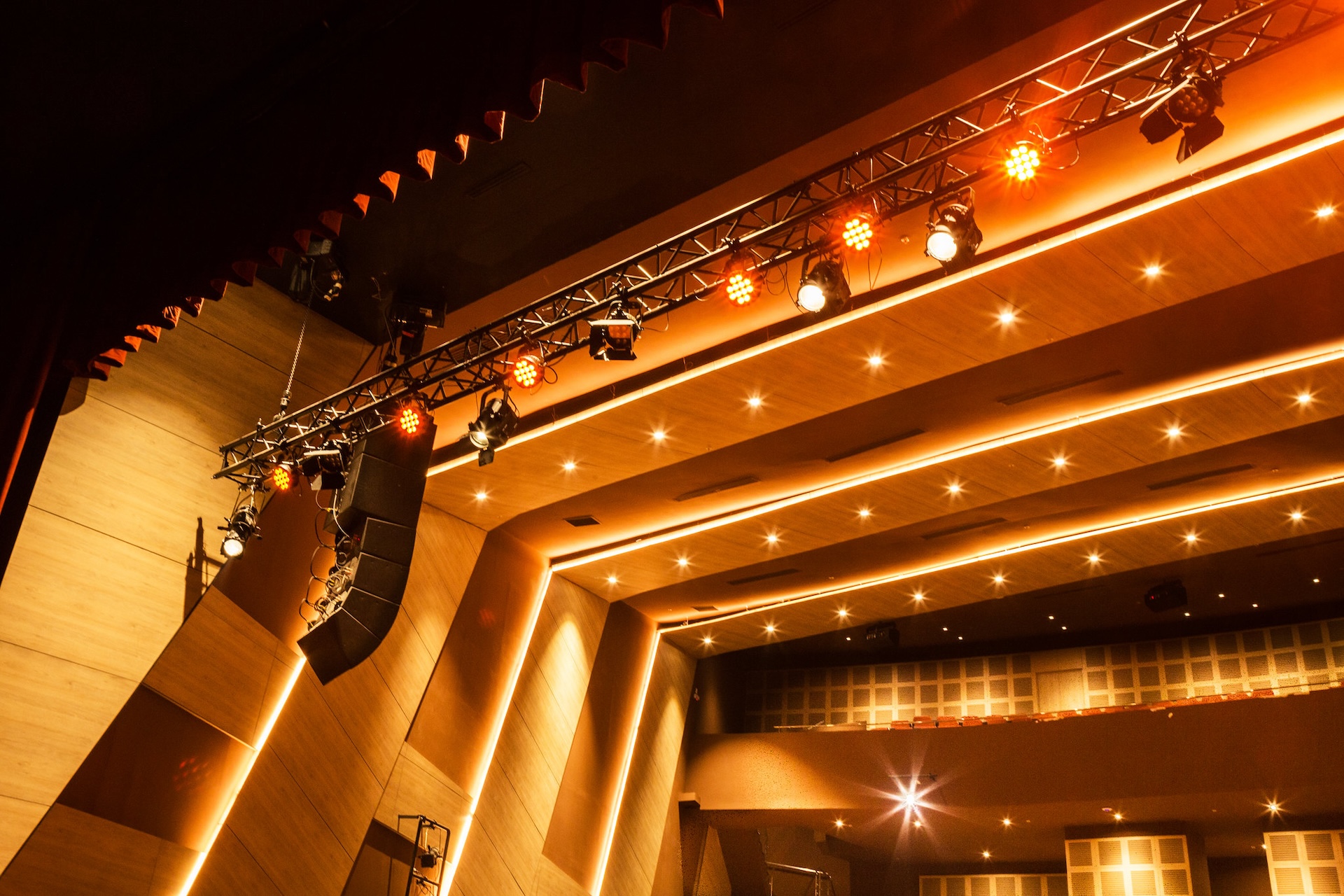
Step into the world of performing arts with this grand theater, where every detail is meticulously crafted for an immersive acoustic experience.
In auditoriums and concert halls, the NRC parameter is of paramount importance for achieving crisp and clear sound quality. These large spaces are designed to amplify performances, requiring materials with high NRC values to prevent echoes and reverberations that can muddy the clarity of the sound. At Design Lab, we’ve worked with venues that have seen significant improvements in audio quality after retrofitting surfaces with sound-absorbing materials that boast higher NRC ratings. Optimal sound absorption transforms a good listening experience into an exceptional one, demonstrating that the correct application of NRC can impact the success of these auditory-centric environments.
Offices and Workspaces
The acoustic atmosphere in offices and workspaces significantly impacts productivity and worker satisfaction. Here, NRC isn’t just about reducing noise, it’s also about protecting privacy and minimizing distractions. For instance, our installations in open-plan offices highlight materials with targeted NRC ratings that help absorb conversational frequencies effectively. Enhanced acoustics contribute to more private and focused areas, making the work environment more conducive to productivity. Through strategic design, Design Lab ensures office acoustics support a balance between collaboration and concentration.
Educational Institutions
In educational institutions, the implications of NRC extend beyond comfort, touching upon the core components of learning and comprehension. Classrooms, libraries, and lecture halls benefit from materials with suitable NRC ratings that aid in reducing background noise and enhancing speech intelligibility. Through our work at Design Lab, we’ve seen how improved acoustics lead to better student engagement and understanding. Implementing the right acoustic solutions can improve the learning experience, proving that careful consideration of the NRC parameter is as educational in nature as it is technical.
Evaluating NRC Performance
Measurement Techniques
At Design Lab, we’re committed to accuracy and precision when evaluating NRC performance. The measurement of a material’s NRC is typically conducted in a laboratory setting using a reverberation chamber. This room is designed to have diffuse sound fields which allow for even sound wave reflection. The testing process consists of measuring the sound absorption coefficient of a sample material at a range of frequencies, usually between 250 Hz and 2000 Hz, which are critical for understanding human speech and interaction.
To ensure consistency, our tests follow ASTM C423, a standard method for measuring sound absorption. ASTM C423 involves placing the test material in the reverberation chamber and emitting sound waves at it, then comparing the reverberation times with and without the material. The results provide a clear picture of the material’s sound absorbing capabilities, which we then analyze thoroughly to understand its performance in real-world applications.
We also employ Impedance Tube Testing for smaller samples, which is a quick and effective way to measure the sound absorption coefficient of materials. This method uses a tube where a sample is placed at one end and sound is generated at specific frequencies. By measuring the sound pressure levels at the sample’s surface and in the air, we can effectively calculate the absorption coefficient.
NRC Rating Scale
Understanding the NRC rating scale is critical for selecting materials that meet the specific requirements of different spaces. The NRC, expressed as a value between 0 and 1, indicates the average sound absorption performance of a material. A higher NRC means more sound is absorbed, thus reducing noise levels. Based on standardized measurements, materials are categorized on this scale, informing our design process at Design Lab.
Here’s a snapshot of the rating scale:
| NRC Rating | Sound Absorption Capabilities |
|---|---|
| 0.00 | No absorption, reflects all sound |
| 0.50 | Absorbs 50% of sound, reflects the rest |
| 1.00 | Excellent absorption, little to no reflection |
Rich in real-world application, these ratings guide us in optimizing acoustic environments. For example, materials with an NRC closer to 1.00 are ideal for areas where speech and concentration are paramount, such as lecture halls and libraries.
By detailing specific NRC ratings in our proposals, we give our clients a transparent understanding of how each material contributes to the overall acoustical design. Complex calculations often reveal surprising insights, like how mixing materials with varying NRCs can create an acoustically balanced space that caters to diverse needs.
Through rigorous testing and adherence to industry standards, we’ve honed our expertise in evaluating NRC performance. Our goal is always to surpass expectations, using precise methods to ensure the acoustic solutions we provide through Design Lab are nothing short of exemplary.
Conclusion
We’ve seen how pivotal NRC is in crafting spaces that not only look good but sound exceptional. Our expertise shines through in the way we integrate high NRC-rated materials with smart design strategies to enhance every auditory experience. Whether it’s for work, learning, or entertainment, we ensure that the acoustical quality of a room is never left to chance. Trust in our commitment to excellence and let us transform your space into an acoustic haven where clarity and comfort meet.
Frequently Asked Questions
What is the Noise Reduction Coefficient (NRC)?
The Noise Reduction Coefficient (NRC) is a scalar representation of the amount of sound energy absorbed upon striking a particular surface. It’s rated on a scale from 0 (no absorption) to 1 (total absorption), and higher NRC ratings indicate better sound absorption capabilities of materials.
Why is NRC important in design?
NRC is critical in design because it helps in selecting materials that effectively reduce noise and reverberation in a space. This contributes to improved speech clarity, privacy, productivity, and overall comfort in environments such as recording studios, conference rooms, and educational institutions.
How do material properties affect NRC values?
The density and porosity of materials greatly influence their NRC values. Dense and porous materials tend to absorb sound better, which can lead to a higher NRC rating. Thus, such materials are considered more favorable for use in acoustic treatments.
Can room geometry affect sound absorption?
Yes, the shape and size of a room significantly impact how sound reflects and diffuses within the space. Design Lab considers room geometry to optimize sound absorption and ensures that the placement of acoustic panels maximizes sound absorption by leveraging sound diffusion principles.
How does surface finish impact NRC?
Surface finish, including the texture and perforations of materials, affects how sound waves interact with the material. Different finishes can alter the sound absorption properties, thus affecting the NRC value. This is why surface finishes must be considered in acoustic design.
Why is the selection of materials crucial for achieving optimal NRC?
Selecting suitable materials with the right NRC values for specific environments is essential as it determines the effectiveness of the acoustic solutions applied. Design Lab focuses on incorporating materials and solutions that are tailored to enhance the acoustic quality of the space.
How is NRC performance evaluated?
NRC performance is evaluated using measurement techniques such as reverberation chamber testing and impedance tube testing. These tests provide accurate assessments of a material’s sound absorption capabilities, ensuring that the materials meet the desired NRC performance standards.
What does the NRC rating scale represent?
The NRC rating scale ranges from 0 to 1 and signifies the average sound absorption performance of a material. Materials with higher NRC ratings are more effective at absorbing sound, making them ideal for improving the acoustic quality of spaces where speech and concentration are critical.
Our Portfolio

Designing the Sound and Visual Experience of Teriyaki Komodo Restaurant: A Case of Technological Innovation

Project KK: Where Art and Technology Converge



How Schallertech Transformed the Atlantic Museum into an Interactive Adventure


Mutis Auditorium at Rosario University. The Greatest Acoustic Challenge We Have Faced.
Lighting that Inspires: An Exceptional Design Project
Table of contents