Table of contents
The Importance of Acoustics in Auditoriums
Acoustics is the science that studies sound and how it propagates through space. It is a fundamental aspect in the design and construction of an auditorium, as it determines the auditory quality and comfort of both attendees and speakers.
Good acoustics allows for clear sound without distortion or annoying echoes, and it adapts to the type of event held in the auditorium.
In this article, I will give you some tips and solutions to improve the acoustics of an auditorium, whether new or existing, thus achieving optimal sound experience. I will explain the factors that influence acoustics, the types of sound-absorbing products you can use, and tips to implement in your project.
If you are interested in learning how to improve auditorium acoustics, continue reading this article to discover everything you need to know about this fascinating field.
Factors Influencing the Acoustics of an Auditorium
The acoustics of an auditorium depends on several factors that need to be considered when designing or improving the space. Here are the main ones:
The Size and Shape of the Room
These affect the reverberation time, intelligibility, and clarity of sound. Reverberation time is the time it takes for the sound to decrease by 60 decibels after the sound source stops. Intelligibility is the ability to understand spoken words. Clarity is the relationship between direct sound and reflected sound. A room that is too large or irregularly shaped can lead to excessive reverberation, low intelligibility, and poor clarity.
The Finishing Materials
These can absorb or reflect sound, creating more or less reverberant environments. Absorptive materials reduce sound levels and reverberation time, while reflective materials increase them. Absorptive materials are usually soft and porous, like fabric, foam, or wool. Reflective materials are usually hard and smooth, like metal, glass, or wood.
The Intended Use of the Space
This determines the appropriate sound level and the type of acoustic treatment needed. A lecture hall requires high speech intelligibility, while a concert hall requires greater reverberation and tonal richness. The intended use of the space also influences the number and distribution of attendees, who act as sound-absorbing elements.

Solutions for Improving Auditorium Acoustics
There are different solutions to improve the acoustics of an auditorium, depending on the type of use and the budget available. These solutions can be categorized into two types: passive and active.
- Passive solutions are those that modify the physical properties of the room, such as its size, shape, or materials. These can be structural or superficial. Structural solutions involve changing the geometry or dimensions of the room, for instance, through movable partitions or sliding panels. Superficial solutions involve applying absorptive or diffusive materials to the walls, ceiling, or floor, for example, through acoustic panels, shades, or carpets.
- Active solutions are those that use electronic systems for sound amplification or correction. Fixed solutions consist of installing speakers, microphones, and equalizers to amplify or attenuate certain sound frequencies. One of the audio technologies we recommend when architectural intervention is not viable is Steerable Array. With this technology, you can focus the sound beam as if it were a light fixture. This way, the sound is focused only on the audience and away from reflective walls and surfaces. You can learn more about Steerable Array technology here.
The advantages and disadvantages of each solution depend on various factors such as cost, complexity, effectiveness, and aesthetics. The criteria for selecting the most appropriate solution are as follows:
- The type of use for the auditorium: choose the solution that best fits the type of event to be held in the auditorium, whether it be a conference, concert, theater, cinema, etc.
- The current state of the auditorium: assess the existing acoustic situation and the problems you wish to resolve, such as reverberation, intelligibility, noise, etc.
- The available budget: consider the cost of the solution and the return on investment, both in economic terms and user satisfaction.

Advantages of Hiring a Professional to Improve Auditorium Acoustics
Improving the acoustics of an auditorium is not an easy task. It requires technical knowledge, practical experience, and specific tools. Therefore, it is advisable to seek the advice and design of a professional specialized in the field. Here are some of the advantages of hiring a professional to improve the acoustics of an auditorium:
- Why a prior acoustic study is necessary: to analyze existing conditions and define acoustic objectives and requirements. A prior acoustic study involves taking measurements of sound levels, reverberation time, intelligibility, and other acoustic parameters in the auditorium. These measurements allow for the diagnosis of existing acoustic problems and the establishment of design criteria to improve them.
- Why it’s advisable to work with an acoustic engineer: to design and implement the most effective and efficient solutions for the situation. An acoustic engineer is a professional with the necessary knowledge and skills to design and execute acoustic improvement projects. The engineer can propose the most appropriate passive or active solutions based on the type of use, current state, and budget of the auditorium. Moreover, they can supervise the installation and operation of the proposed solutions and ensure their compliance with current regulations.
- Why it’s recommended to hire Schallertech: for its experience, certifications, quality, and range of services in the AV, lighting, control, and acoustics fields. Schallertech is a leading company in the sector of audiovisual technologies, lighting, control, and acoustics. It has a multidisciplinary team of highly qualified professionals, certified by major market brands. The company offers comprehensive services ranging from consultation and design to installation and system maintenance. In addition, it guarantees quality and customer satisfaction through personalized attention and after-sales service.
Frequently Asked Questions
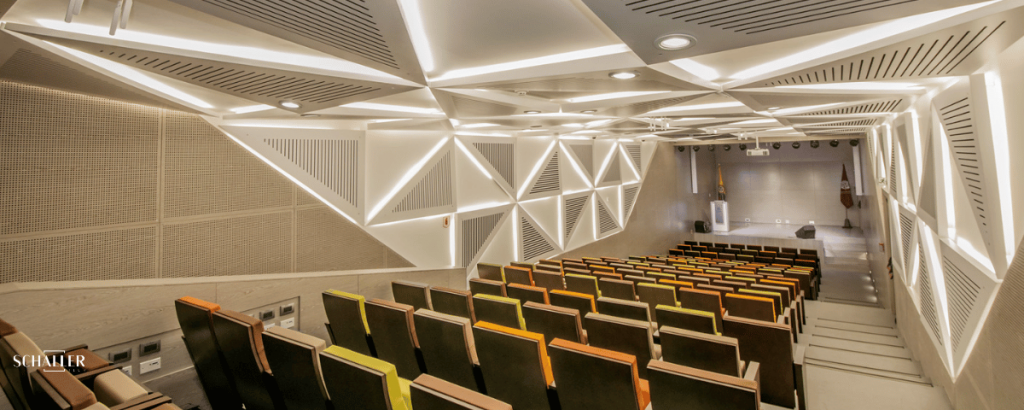
Below, we answer some of the most frequently asked questions that may arise regarding auditorium acoustics.
- What is reverberation time and how is it measured? Reverberation time is the time it takes for sound to decrease by 60 decibels after the sound source has ceased. It is one of the most important parameters for assessing the acoustic quality of a room. It is measured using a sound level meter that records the sound level as a function of time. It can also be calculated using mathematical formulas that take into account the room’s volume and absorption coefficients.
- What is the difference between sound absorption and sound diffusion? Sound absorption is the phenomenon where a material reduces sound levels by converting some of the sound energy into heat. Sound diffusion is the phenomenon where a material disperses sound in different directions by reflecting it irregularly. Both phenomena contribute to improving the acoustics of a room by reducing undesired reflections and increasing the uniformity of the sound field.
- What are electroacoustic systems and how do they work? Electroacoustic systems are systems that use electronic devices to capture, process, amplify, and reproduce sound. These systems consist of four basic elements: the sound source, the microphone, the amplifier, and the speaker. The sound source is the element that generates the original sound, such as a voice or a musical instrument. The microphone is the device that converts the sound into an electrical signal. The amplifier is the device that increases the power of the electrical signal. The speaker is the device that converts the electrical signal back into sound. Electroacoustic systems allow for improved sound quality and levels in an auditorium, as well as correcting potential acoustic defects through equalization or noise cancellation.
- What is speech intelligibility and how is it assessed? Speech intelligibility is the ability to understand the words spoken in a sound environment. It is a key parameter for assessing the acoustic quality of an auditorium designed for lectures or speeches. Speech intelligibility depends on several factors, such as the level and clarity of direct sound, the level and reverberation time of reflected sound, the level and type of background noise, and the characteristics of the sound source and receiver. Speech intelligibility can be measured using various methods, such as the Speech Transmission Index (STI), the Articulation Index (AI), or the Word Transmission Index (WTI). These methods involve playing a series of words or phrases in the auditorium and recording the proportion of words or phrases correctly understood by the listeners or by an acoustic analyzer.
- What is ISO 3382 standard and what acoustic parameters does it define? ISO 3382 is an international standard that establishes the methods for measuring acoustic parameters in rooms. This standard is divided into three parts: the first part pertains to rooms intended for music, the second part pertains to rooms intended for speech, and the third part pertains to open spaces. Some of the acoustic parameters defined by this standard are: reverberation time, clarity, definition, sound pressure level, speech intelligibility index, center time, initial level, late level, and diffuse sound field.
Conclusion
In this article, we have explained how to improve the acoustics of an auditorium, an essential aspect to ensure good sound quality and comfort. We have shown you the factors that influence acoustics, the solutions available to improve it, and the advantages of hiring a specialized professional for the task.
We hope that you find this article useful and interesting, and that it has helped you better understand the importance of acoustics in auditoriums. If you want to know more about this topic or need consultation or design for your auditorium project, don’t hesitate to contact Schallertech, a leading company in the field of audiovisual technologies, lighting, control, and acoustics.
We offer a comprehensive and personalized solution for your auditorium, from the preliminary acoustic study to the installation and maintenance of the systems. We have a team of highly qualified and certified professionals backed by major market brands. We guarantee quality and satisfaction with personalized attention and after-sales service.
Don’t wait any longer, get in touch with us and request your non-binding quote. Schallertech will help you improve the acoustics of your auditorium and create an unforgettable sound experience. We look forward to hearing from you!
Our Portfolio
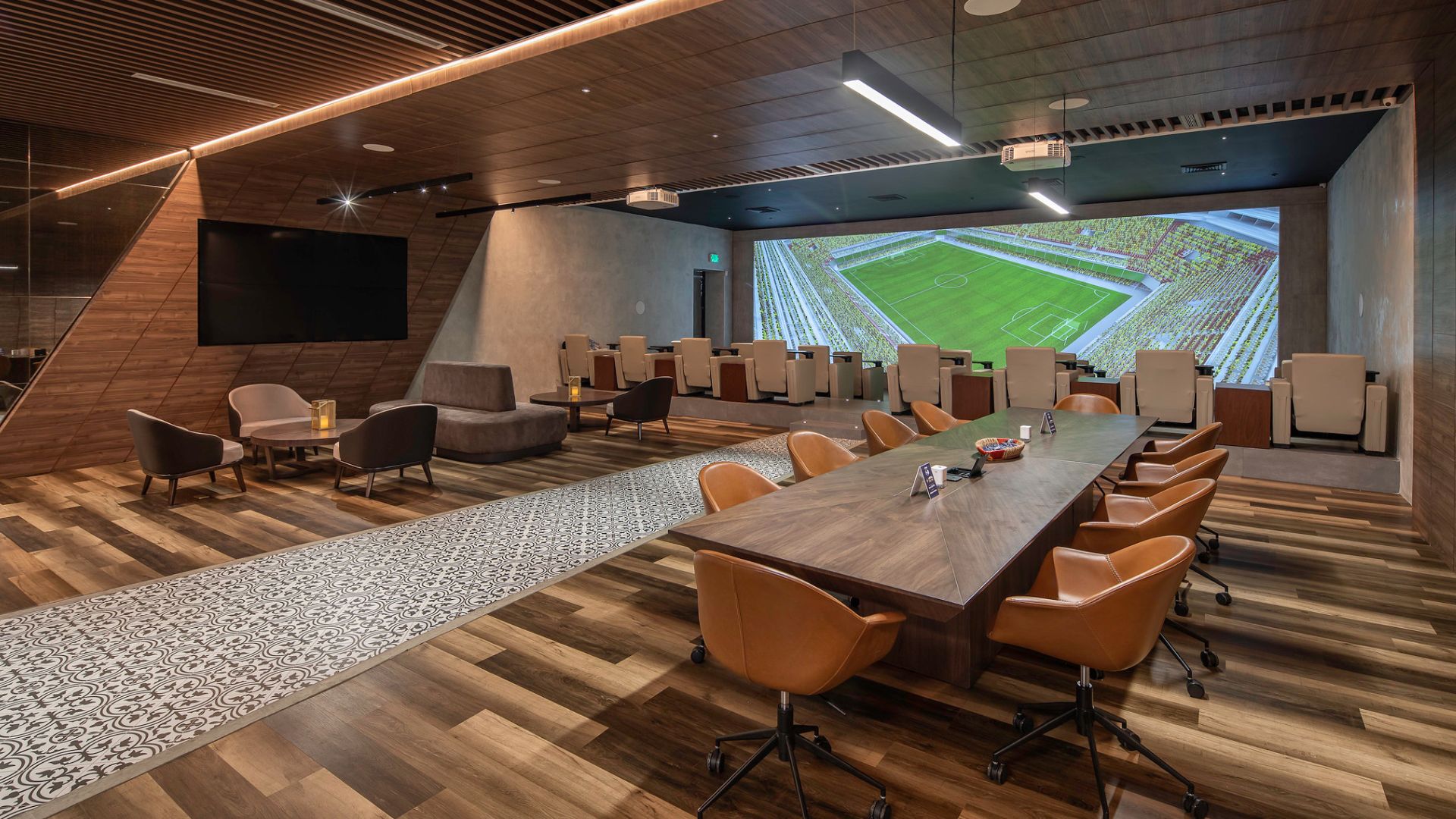

Casa PC: Design, Entertainment, and Technology

Lighting that Inspires: An Exceptional Design Project

Art and Light: Contemporary Design in the SB Apartment


Apartment in Barranquilla: Home Automation and Lighting
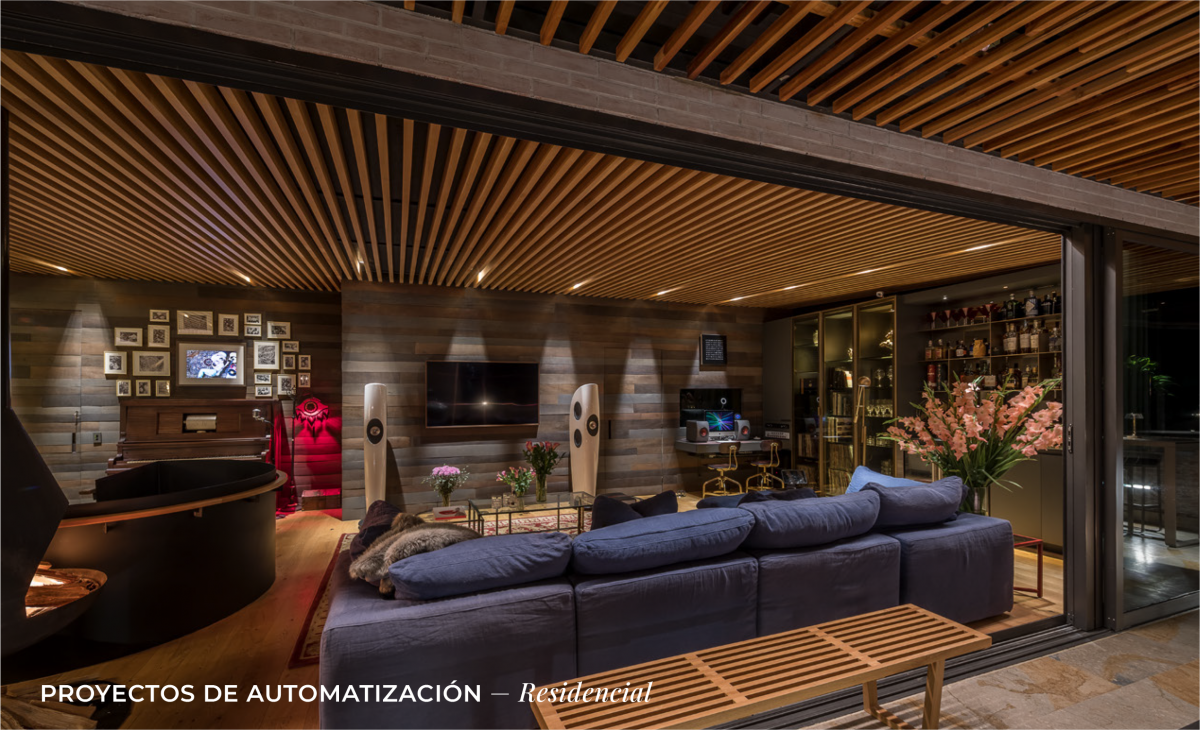
The House in the Air: Technological Transformation

Designing the Sound and Visual Experience of Teriyaki Komodo Restaurant: A Case of Technological Innovation
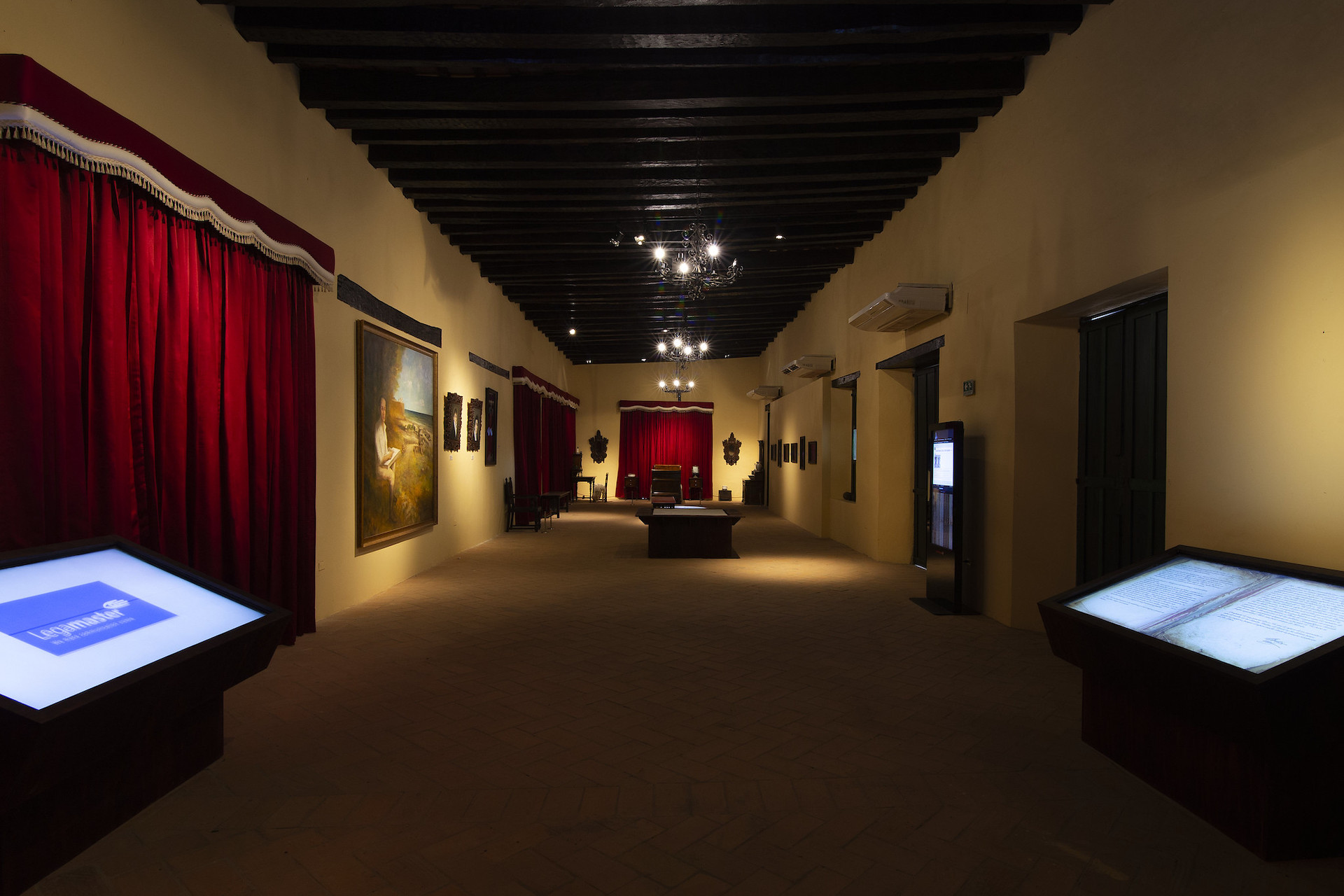
The Renaissance of the Bolivarian Museum of Soledad: Technology and Tradition Intertwined

CM: When Technology Meets Creativity
Table of contents