Table of contents
We’ve all been there—straining to hear a speaker at a conference or getting distracted by echoes in a poorly designed venue. At Schaller Design Lab, we understand that acoustics can make or break an event.
That’s why we’re diving into the world of conference venue acoustics. We’ll share insights on how sound travels, the impact of acoustics on communication, and why it’s crucial for a successful gathering.
Stay tuned as we reveal the secrets to perfecting the auditory experience in any conference setting. With our expertise, you’ll discover how to choose venues that ensure clarity, engagement, and a memorable event for every attendee.
Importance of Acoustics in Conference Venues
Enhancing Speech Clarity
In the landscape of successful events, speech clarity stands as a crucial pillar. It’s often taken for granted, yet its impact on conference outcomes can’t be overstated. When acoustics are tuned to perfection, every word from a presenter’s mouth reaches the audience with sharp audio precision. This crystal-clear transmission of sound is essential for maintaining the attendees’ focus and ensuring the message is not only heard but also understood.
For instance, in a well-designed room by our business, Design Lab, the difference is audible. Lectures become more engaging, and Q&A sessions turn remarkably dynamic because listeners don’t struggle to catch every syllable. It’s all about minimizing reverberation; when sound waves bounce minimally, speech intelligibility soars. Our expertise in architectural acoustics transforms venues into bastions of clarity.
Reducing Background Noise
Background noise is the arch-nemesis of concentration. A venue humming with echoes, HVAC rumblings, or external commotion can derail an event’s focus. At Design Lab, we’ve seen how noise reduction techniques can reshape an auditory environment. By integrating sound-absorbing materials and strategic design elements, we counteract unwanted noise, creating a serene auditory canvas suitable for high-stakes conferences.
Effective noise control comes down to a keen understanding of sound paths and the application of acoustic treatments. These may include:
- Acoustic panels
- Carpeting
- Ceiling clouds
Each element works in unison to create a buffer zone against intrusive sounds. This allows attendees to remain engaged and productive, unburdened by the clatter and commotion that typically infiltrates less optimized spaces. With a quiet, controlled atmosphere, participants can network and absorb information without the strain that accompanies noise pollution.
Factors Affecting Acoustics in Conference Venues
Room Size and Shape

Experience the synergy of this modern conference room, where ideas come to life through engaging presentations and discussions.
At Design Lab, we’re acutely aware that the size and shape of a room are critical factors in the acoustics of conference venues. Larger spaces often result in more echo and reverberation, which can garble speech and hinder communication. Conversely, smaller rooms can sometimes amplify noise levels, making a conversation feel overwhelming.
The shape plays an equally important role, as some designs can contribute to uneven sound distribution. A room with a high ceiling and irregular walls may cause sound waves to bounce in unanticipated directions, whereas a rectangular space can promote more uniform sound travel. To optimize acoustics, we consider both the vertical and horizontal dimensions and how sound interacts with them.
Surface Materials
The choice of surface materials is another aspect we can’t overlook when enhancing the acoustics within conference venues. Hard surfaces, like glass or concrete, can exacerbate noise issues by reflecting sound waves. This leads to a multiplication of echoes and an increase in overall volume, which is precisely what we aim to avoid.
To counteract this, we recommend the use of sound-absorbing materials such as:
- Carpeting
- Acoustic ceiling tiles
- Wall fabrics
- Foam panels
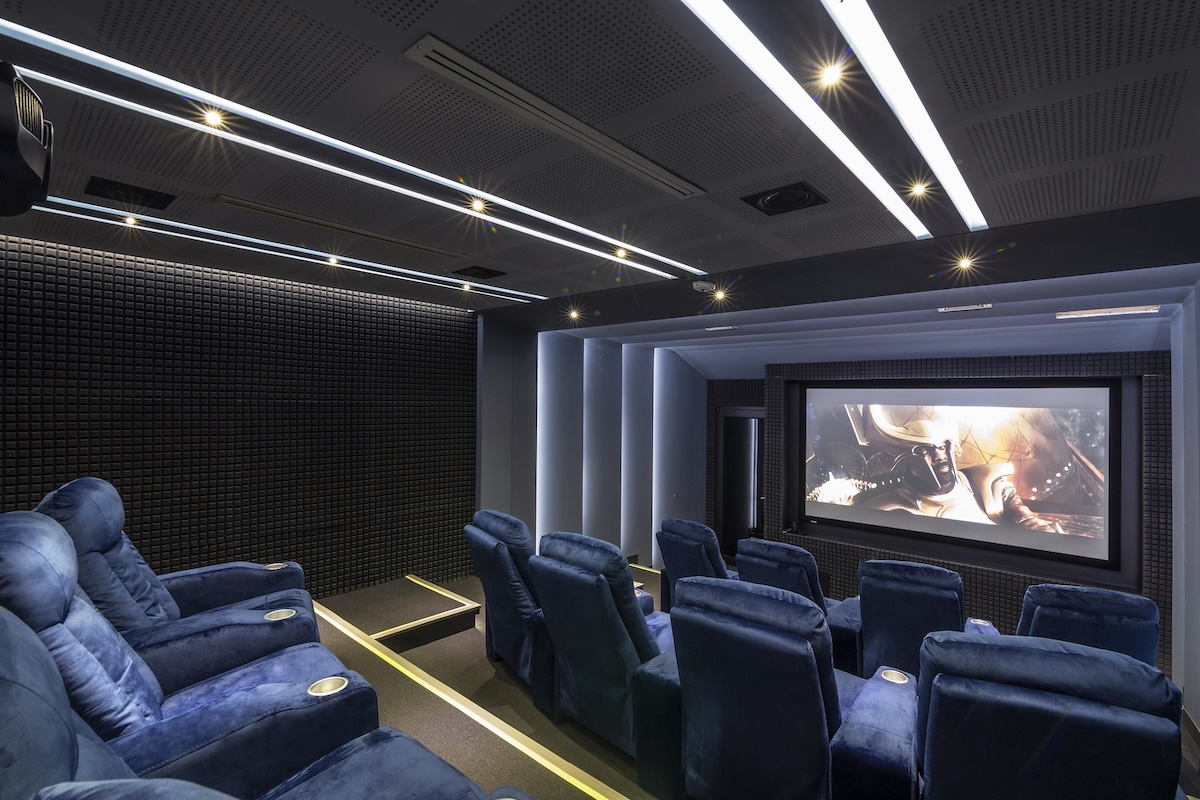
These materials help absorb sound waves rather than reflecting them, resulting in a significant reduction in echo and background noise. It’s crucial to strategically place these materials to cover enough surface area and effectively manage the sound within the space.
Sound System Design
A well-designed sound system is the backbone of clear auditory communication in conference venues. At Design Lab, we focus on creating sound systems that are tailored to the specific acoustics of a room. This includes careful speaker placement to ensure even sound coverage and the avoidance of feedback loops. We also emphasize the importance of high-quality microphones that can accurately capture and transmit the speaker’s voice with minimal interference.
Our expertise in sound system design includes understanding the nuances of directional speakers, which can direct the sound precisely where it’s needed, and the use of mixers and amplifiers that can adjust audio levels in real-time. Each component of the sound system plays a crucial role, and optimizing each element contributes to an impeccable auditory experience for every attendee.
Acoustic Treatment Options for Conference Venues
Acoustic Movable Partitions for Space Divisions
In bustling conference venues, versatility is key. That’s where Acoustic Movable Partitions come in. These ingenious solutions allow us to reconfigure rooms to suit different event sizes and needs, all while maximizing sound quality. The partitions are designed to effectively block or absorb sound, ensuring that separate events can occur concurrently without auditory interference. At Design Lab, we’ve seen firsthand how installing these flexible partitions facilitates a customizable acoustic environment, leading to better attendee experiences and more dynamic event capabilities.
Sound Absorbing Panels
Next up, Sound Absorbing Panels play a crucial role in enhancing acoustics. Not all surfaces are created equal when it comes to managing sound, and that’s where these panels prove their worth. By installing them on walls across the conference venue, we cut down on unwanted echoes and reverberations. Our carefully selected materials are key, transforming noisy areas into clear and pleasant listening spaces. Sound absorbing panels don’t just function well, they can also be woven into the aesthetic fabric of Design Lab’s venues, serving both form and function.
Ceiling Treatments
Don’t overlook the importance of Ceiling Treatments. In high-ceilinged venues, sound can travel upwards and create a cacophony that distracts from the speaker’s message. By incorporating specially engineered acoustic tiles or baffles, we ensure that sound is controlled and directed appropriately. These treatments can absorb and disrupt sound waves, optimizing speech intelligibility. At Design Lab, we’ve effectively used ceiling treatments to reduce noise levels and contribute to an acoustically balanced environment.
Acoustic Curtains
Lastly, Acoustic Curtains are a simple yet effective method to dampen sound within conference venues. These heavy-duty curtains are made with sound absorbing materials that catch and reduce noise, contributing to a more focused auditory experience. They can be drawn around specific areas to create makeshift booths or used to cover windows and walls where sound leakage might be an issue. We’ve selected high-performance acoustic curtains that serve as an additional layer of sound control, ensuring participant concentration remains high and distractions low.
By integrating these treatment options, we transform conference venues into hubs of clear communication and seamless sound management, providing an impeccable auditory experience for all attendees.
Tips for Optimal Acoustics in Conference Venues
Proper Speaker Placement

Experience superior sound with this large speaker, perfectly placed in an auditorium filled with colorful seats.
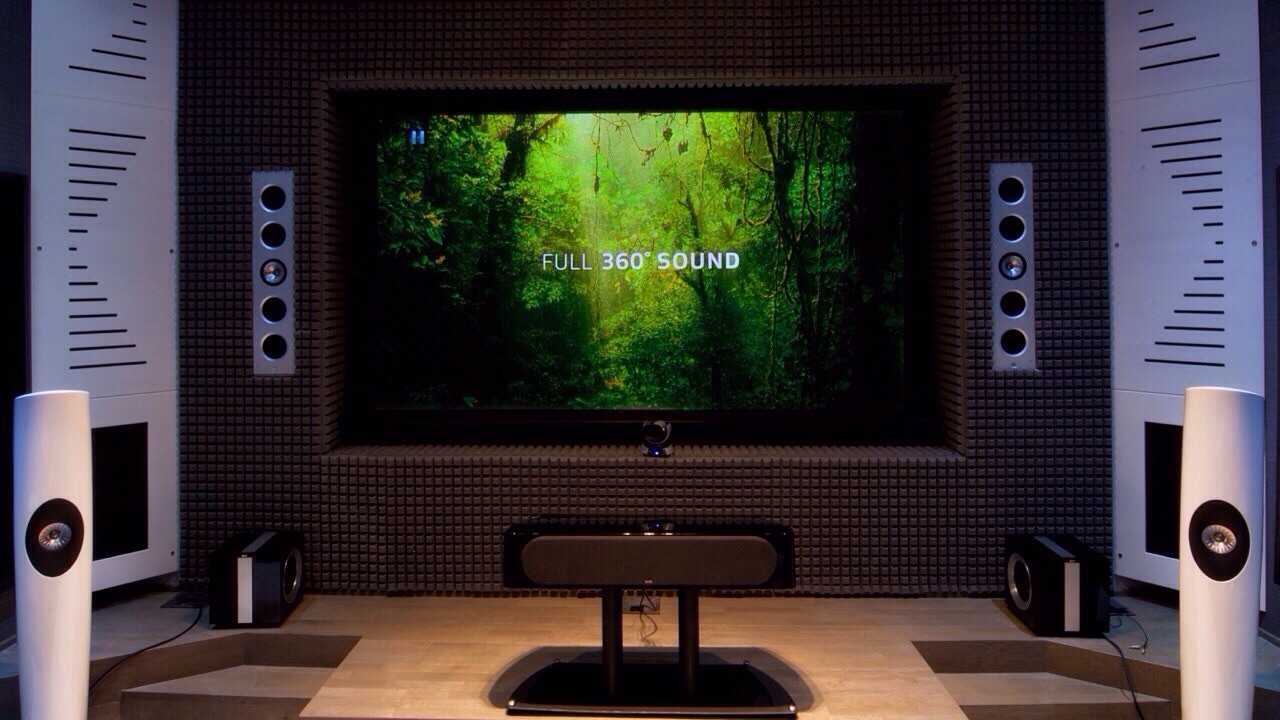
When setting up a conference space, we always prioritize the correct placement of speakers. It’s a fundamental step that significantly influences the overall sound quality at an event. Our team at Design Lab ensures that speakers are placed at the front of the room, facing the audience, to direct sound effectively. We avoid placing them near reflective surfaces like windows and concrete walls to reduce reverberation. Positioning speakers above the audience level also helps to distribute sound evenly across the room, ensuring that everyone hears the speaker without strain.
Adequate Soundproofing
Soundproofing is crucial for minimizing disruptions in a conference venue. Our approach at Design Lab includes the integration of high-quality soundproofing materials in the construction or renovation of the space. We focus on doors, windows, and walls, as these are common areas for sound leakage. By installing thicker doors with proper seals and using double-pane windows, we drastically reduce the intrusion of external noise. Additionally, walls benefit significantly from added layers of dense soundproofing materials that absorb and block unwanted noise. This attention to detail ensures that the conversations inside the conference venue remain isolated from outside distractions.
Regular Maintenance and Testing
To consistently provide top-notch acoustic experiences, we emphasize the importance of regular maintenance and testing of the sound system. At Design Lab, we conduct frequent inspections to identify any potential issues that might compromise sound quality. This includes checking the integrity and performance of speakers, microphones, and amplifiers. Testing the acoustics of a room before an event, allows us to make necessary adjustments in real time. Moreover, by updating equipment periodically and replacing worn-out components, we ensure our sound systems remain reliable and effective for every conference held in the venue.
Conclusion
We’ve explored the critical role acoustics play in conference venues and their direct impact on the success of events. By implementing sound-absorbing materials, strategic design, and acoustic treatments, we ensure speech clarity and reduce distractions. Proper speaker placement and soundproofing further enhance the auditory experience while regular maintenance guarantees the sound system’s performance. Let’s remember that great acoustics are not just about technology—it’s about creating an environment where communication thrives and every voice is heard. With the right acoustical strategies in place, our conference venues can become hubs of clear, effective dialogue that leave lasting impressions on attendees.
Frequently Asked Questions
Why are acoustics important in conference venues?
Good acoustics are essential in conference venues to ensure speech clarity, which enhances understanding and focus among attendees. Clear audio contributes to the success of an event by facilitating effective communication.
How can background noise affect a conference?
Background noise in a conference venue can distract attendees, reducing their ability to concentrate and potentially leading to miscommunication or a loss of interest in the event’s content.
What are some techniques to reduce noise in conference venues?
To reduce noise in conference venues, one can use sound-absorbing materials, strategic design elements, and acoustic treatments that minimize echoes and noise interference, creating a clearer and more focused listening environment.
How does proper speaker placement improve a conference’s success?
Proper speaker placement ensures even sound distribution throughout the venue, so all attendees can hear the content clearly. This avoids areas with too much or too little volume, enhancing the overall audio experience.
Why is soundproofing crucial for conferences?
Soundproofing is crucial for minimizing disruptions from external noises, allowing participants to remain focused on the conference content without being distracted by sounds from outside the venue.
What is the importance of regular maintenance and testing of the sound system in a conference venue?
Regular maintenance and testing of a conference venue’s sound system are vital to prevent technical issues and ensure high-quality, reliable audio performance during every event.
Our Portfolio
Smart and Exceptional Design: TC Project

Apartment in Barranquilla: Home Automation and Lighting

Chapel Hacienda Las Marías. The Evolution of Lighting in Worship Spaces

Art and Light: Contemporary Design in the SB Apartment


Residential Design Casa JC: Sophistication and Technology

Table of contents